

Food
Food Quality Control: How AI Is Changing Inspection
xis.ai
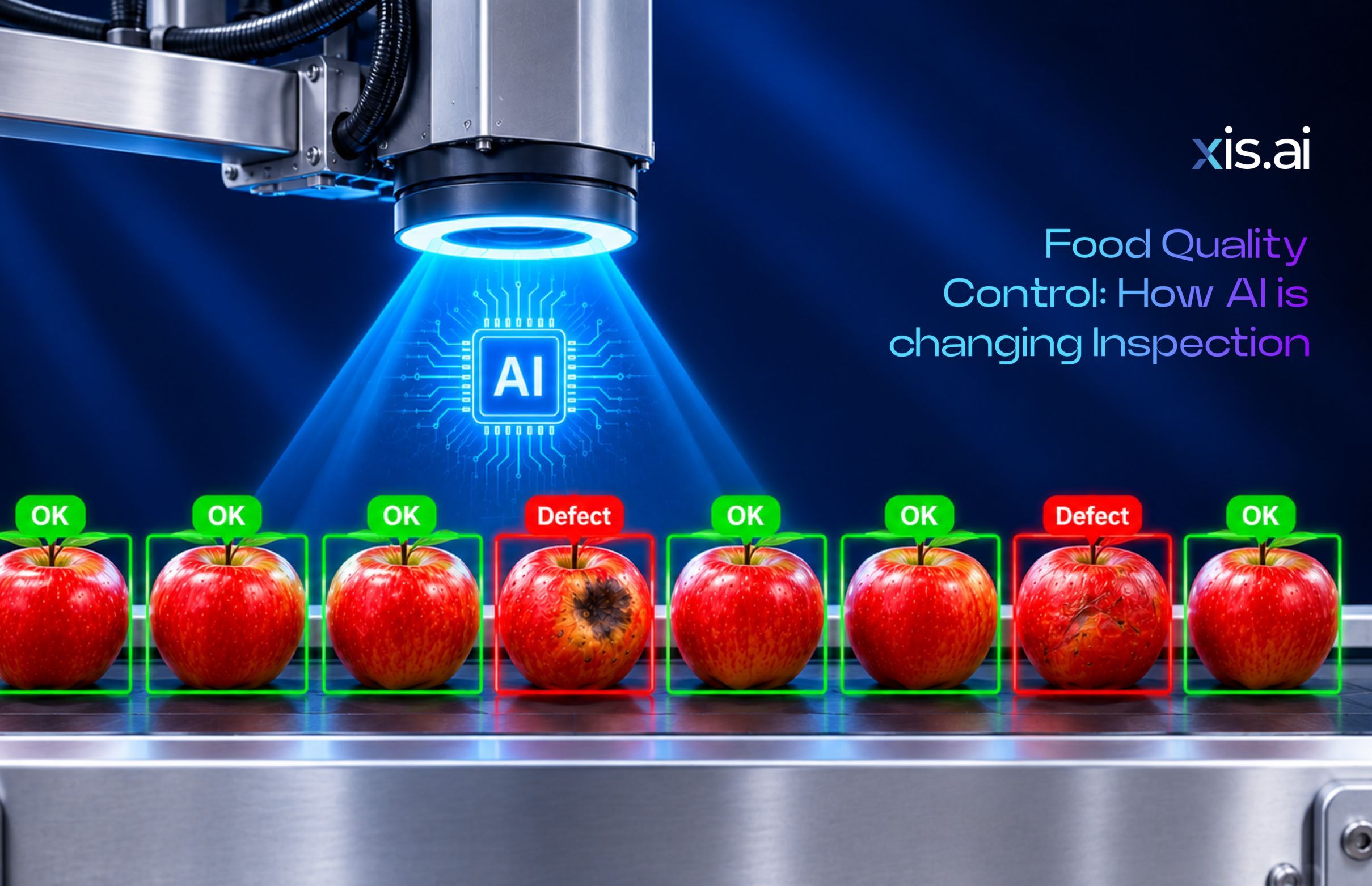
Food manufacturers have always had to protect consumers from contamination, damaged packs and wrong labels. For decades, that work has relied on manual checks, which are slow, labor-intensive and easy to get wrong at line speed.
AI in the food industry is changing how quality control works. This guide explains what food quality control is, why traditional methods fall short, what AI inspection can check, and where food inspection is heading.
What is Food Quality Control?
Food quality control is the process of inspecting and testing food products to make sure they meet set standards for safety, appearance and specification before they reach customers.
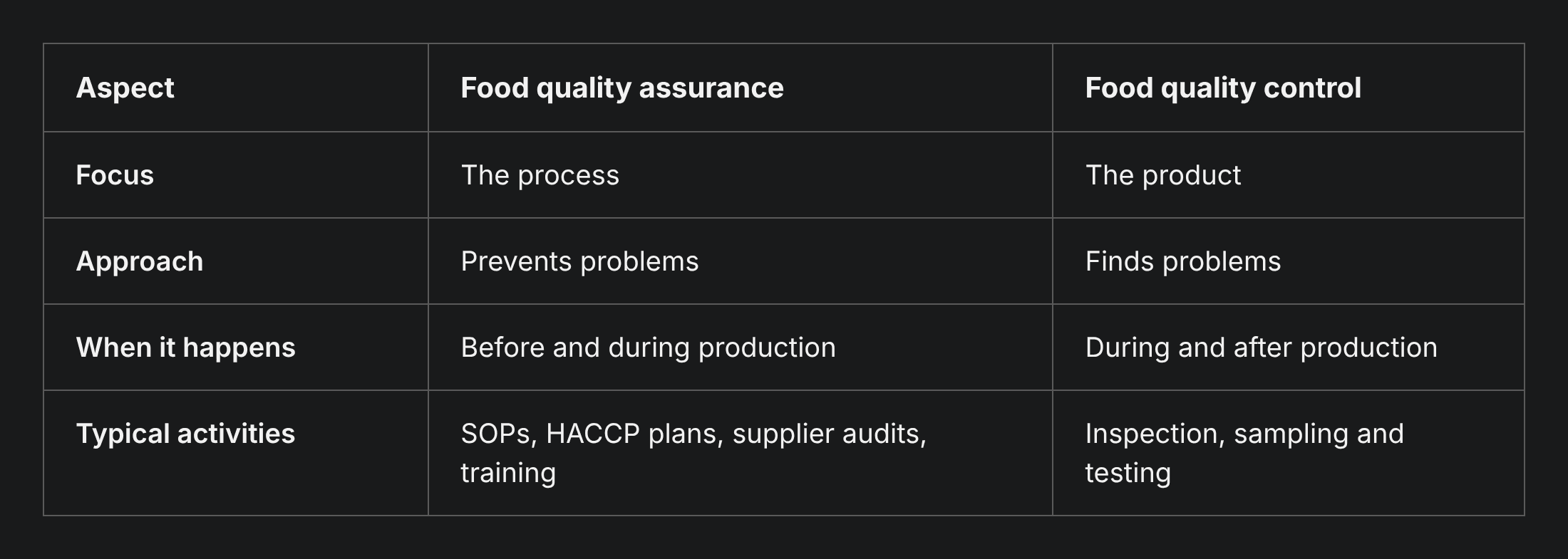
It works alongside food quality assurance. Here's how the two compare:
Why Traditional Food Quality Control Falls Short
Manual inspection and fixed-rule systems have served food manufacturers for decades, but they struggle to keep up with today's line speeds and quality expectations. Here's where they fall short:
- Sampling: People can only check a share of the units, so defects slip through between checks.
- Fatigue: Attention drops over a long shift, and judgments vary between inspectors.
- Natural Variation: No two loaves or cookies look exactly alike, so fixed rules and tolerances reject good products along with bad ones.
- Paper Records: Manual checks are hard to trace back to a specific unit, batch or time when a complaint comes in.
How AI Is Changing Quality Control in Food Industry
AI inspection uses cameras and computer vision to check every unit on the line. It works in four steps:
- Capture the Image: Industrial cameras and controlled lighting photograph each unit as it passes.
- Learn the Normal Range: The AI model is trained on images of your own production, including its natural variation.
- Check Each Unit: The model compares every unit with that normal range and flags anything outside it.
- Act and Record: Rejected units are removed from the line, and every result is saved.
What AI Inspection Can Check in Food Production
AI inspection can check far more than a human inspector can at line speed, from the product itself to the pack it leaves in. Common checks include:
- Bake Colour: Browning graded across the whole surface, not just at one spot.
- Shape and Form: Height, width, proportion and outline measured as recorded values.
- Foreign Bodies: Visible contamination on the product or in the pack.
- Toppings and Seeding: Presence, coverage and spread of seeds, glaze, sugar or garnish.
- Cuts and Cracks: Intentional scoring told apart from cracking and tearing.
- Count and Placement: Units per tray or pack, and their position before sealing or freezing.
- Seal and Packaging Inspection: Seal integrity, product trapped in the seal, closure and pack condition.
- Label Inspection: The correct label, its placement and legibility, plus date and lot codes.
- Underside: Base bake, burning and sticking, checked at a second inspection point.
Where AI Inspection is Used in Food Production
The same checks apply across most food categories:
- Bakery: Bake colour, shape, toppings and underside checks on bread, rolls and pastries.
- Meat and Poultry: Foreign bodies, tray placement and seal integrity before packs leave the line.
- Dairy: Label, date code and seal checks on cups, bottles and cartons.
- Snacks and Confectionery: Shape, colour and count checks before products are packed.
- Ready Meals: Component placement and seal checks on trays.
Benefits of AI in Food Manufacturing
For food manufacturers, moving from manual checks to AI inspection brings five practical benefits:
- Every Unit Inspected: The whole production is checked at line speed, not a sample.
- Consistent Grading: The same criteria apply on every shift, so quality no longer depends on who is inspecting.
- Less Waste: Drift in a process such as baking or proofing shows up early, before a whole batch is out of specification.
- Traceability: Each unit gets its own record, so a complaint can be traced to the exact batch and time.
- Faster Response: Problems are flagged as they happen, so the line can be corrected right away.
Challenges of AI Inspection in Food Processing
Quality control in food processing brings conditions that standard vision systems are not built for. Here's how they are handled:
- Training Data: Models are trained on images from your own line, including examples of each defect you need to catch.
- Daily Washdown: IP69K-rated housings, drainable mounting and materials that resist cleaning chemicals.
- Heat, Steam and Flour: Cameras are shielded for oven-side placement, with sealed optics.
- Changing Light: Dome, backlight or structured lighting is specified and validated for each application.
- Integration with Existing Lines: Results go straight to the line’s PLC and MES, and inspection points are added without stopping the line.
- Upfront Investment: A pilot runs on one line first, with a wider rollout only once results meet your requirements.
The Future of Food Quality Control
As AI inspection becomes standard on food lines, three trends are shaping where food quality control is heading:
- Appearance as a Specification: shape, colour and finish are increasingly measured and scored, not just noticed.
- More Sensing Options: 3D sensing for volume and height, near-infrared (NIR) for browning and moisture, and line-scan cameras for continuous products.
- Connected Plants: results from every line and site in one view, as covered in our guide to centralized AI inspection.
How Does xis.ai Bring AI Quality Control to Food and Bakery Lines?
xis.ai's AI inspection for food and bakery is built for the conditions described above and for the checks bakery quality control depends on.
- xis.dev: No-code annotation and training, so your quality engineers can build and retrain models in-house when a recipe or product changes.
- xis.rt: Runs the models at each inspection point at 150 frames per second, fully offline, and signals reject, alarm or line halt to your PLC and MES over OPC-UA and MQTT.
- xis.dashboard: Brings inspection results, images and data from every line, plant and country into one view, hosted on your own servers. It turns that data into actionable insights, such as defect trends, recurring failure patterns and line-by-line performance, so your teams can act on problems earlier, reduce scrap and optimize production.
- Food-ready hardware: IP67 Cameras, lighting and sensing specified for the conditions on your line.
Is Your Food Line Ready for AI Quality Control with xis.ai?
If your team still relies on sampling and manual checks, problems such as failed seals, wrong labels or inconsistent batches can reach customers before anyone notices. AI quality control checks every unit at line speed instead.
xis.ai learns what your own products should look like and runs on hardware built for washdown, heat and flour. To find out whether your line is ready, send us 20 images of the defects you need to catch. Our engineers will train a model and give you a clear yes or no, at no cost. If the answer is yes, a pilot on one production line follows, running alongside your current checks.
If you would like to discuss your line before testing, you can also book a technical call with one of our engineers.
Frequently Asked Questions
What are the 7 types of quality control?
They are the seven basic quality tools: check sheets, control charts, histograms, Pareto charts, fishbone diagrams, scatter diagrams and stratification.
What are the 7 principles of food safety?
They are the seven HACCP principles: hazard analysis, critical control points, critical limits, monitoring, corrective actions, verification and record-keeping.
How is AI used in the food industry?
AI is used for demand forecasting, recipe development and supply chain planning. On production lines, one of its most common uses is automated visual inspection of products and packaging.
Can AI detect foreign objects in food?
AI vision can detect visible foreign bodies on the product surface or in the pack before it is sealed. Objects hidden inside the product need other methods, such as X-ray or metal detection.
Does AI inspection replace food safety lab testing?
No. Vision inspection checks what can be seen, such as defects, foreign bodies, seals and labels. Microbial, allergen and chemical testing still needs laboratory methods.