

How
How Centralized AI Inspection Improves Consistency Across Plants
xis.ai
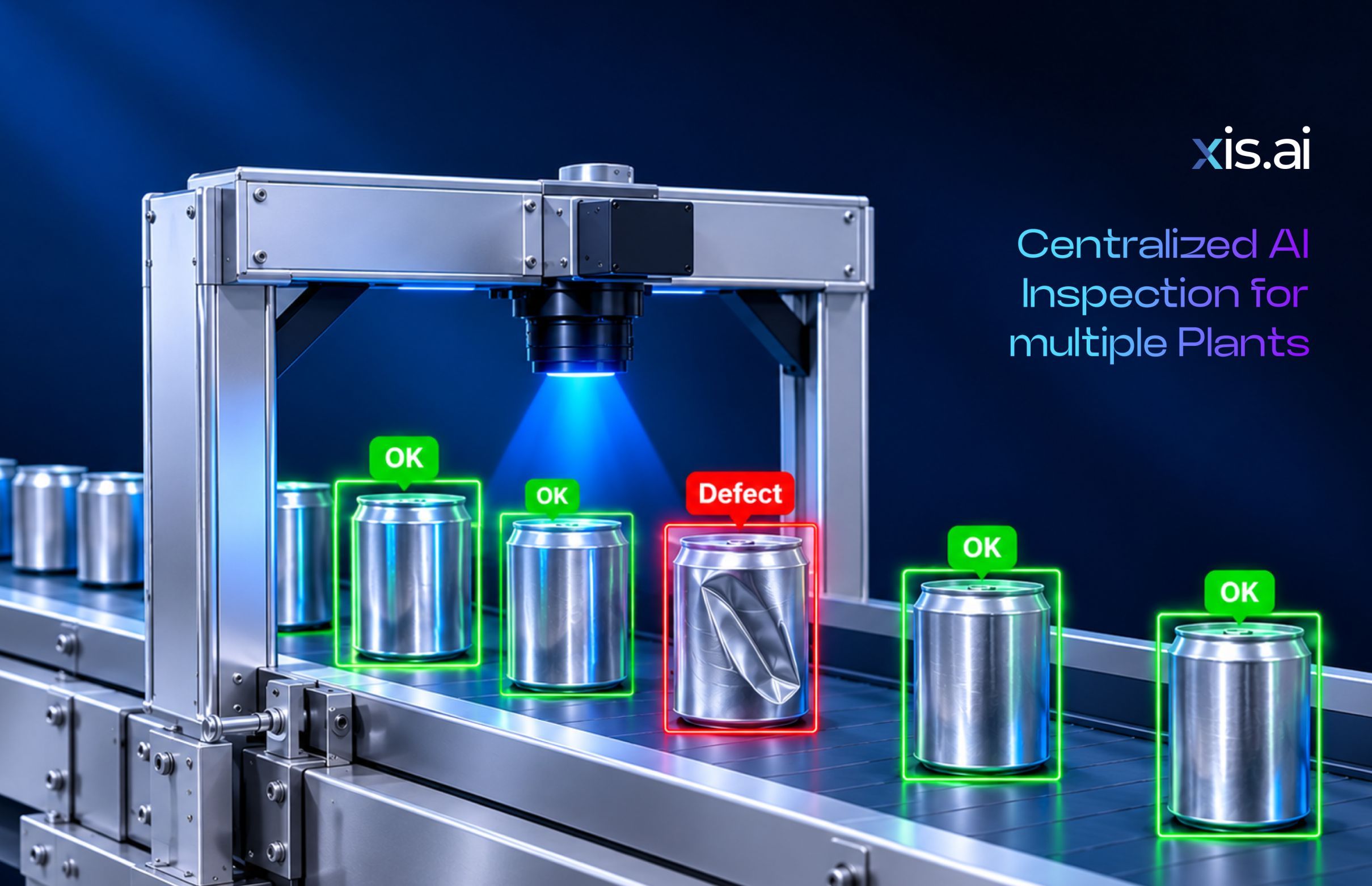
When the same product is made in several plants, it should meet the same standard in every one of them. In practice, quality consistency often breaks down between sites. One plant passes a unit that another would reject, because each site inspects in its own way.
Centralized AI inspection is one way to bring every plant back to the same standard. This guide explains why quality varies between plants, how centralized AI inspection works, where the AI should run, and how to roll it out across your sites.
Why Does Quality Vary Between Plants?
Differences between plants typically originate from five sources of quality control in manufacturing:
- Inspection Processes: Sites have their own processes, sampling and checklists.
- Defect Tolerances: A small scratch may be seen as a small defect by one group of people but will be rejected by another site.
- Manual Inspection: Every person will inspect differently, plus every shift will have variation.
- Equipment and Calibration: Every line will have different cameras, lighting and settings, plus these will drift over time.
- No Data Sharing: Data remains within the site, meaning any issues are hidden from other sites.
Each reason is minor on its own, but taken together you can see how products will leave each site at varying levels of quality.
Signs Your Plants Need Centralized AI Inspection
If any of these sound familiar, your plants are likely inspecting to different standards:
- Non-uniform Defect Rates: The defect rate of the same product is highly variable between different plants.
- One Site Complaints: Customer complaints continue to come from the same plant or line.
- Slow Quality Reporting: The performance of one product in every plant has to be checked, which requires the collection of reports from each plant.
What is Centralized AI Inspection?
Centralized AI inspection is an approach to automated visual inspection that gives every line and plant one shared inspection standard and a single view of all results.
In practice, it has three parts:
- Shared Standard: Every line and plant uses the same AI models, defect classes and inspection criteria.
- Local Inspection: Each line still checks its own products, in real time, right at the line.
- Central Visibility: Results from every line and plant are collected in one central dashboard.
How Centralized AI Inspection Improves Consistency
Bringing every plant onto one inspection standard improves consistency in four ways:
- Standardised Decision-Making: Every Unit is decided based on the same criteria, regardless of whether it’s been produced in Plant A, B or C.
- Consistent AI Defect Detection: Every Unit is checked using the same AI models and criteria. This removes human error variation from the process.
- Real-Time Data Sharing: Centralized monitoring of all plants indicates those that are performing best and others can replicate them.
- Data-Driven Decisions: If one plant discovers a new defect pattern, then information from that plant can inform decision-making for the other plants prior to the pattern spreading across the plants.
Benefits of Centralized AI Inspection
For quality and operations teams, the benefits go beyond consistent inspection:
- Fewer Customer Complaints: When every plant applies the same standard, fewer defective units reach customers.
- Less Waste: Defects are caught at the line, before faulty units move further through production, which reduces material waste and rework.
- Traceability: Every unit gets a recorded result, so a quality issue can be traced back to the plant and line where it started.
- Easier Scaling: New lines and plants start with proven models and the same criteria from day one.
- Faster Product Changes: When a product changes, the model is retrained once and the update goes to every line, instead of reprogramming each plant separately.
Edge vs Cloud Inspection for Multiple Plants
Centralizing inspection raises a practical question: where should the AI models run? Here's how the two main approaches compare:
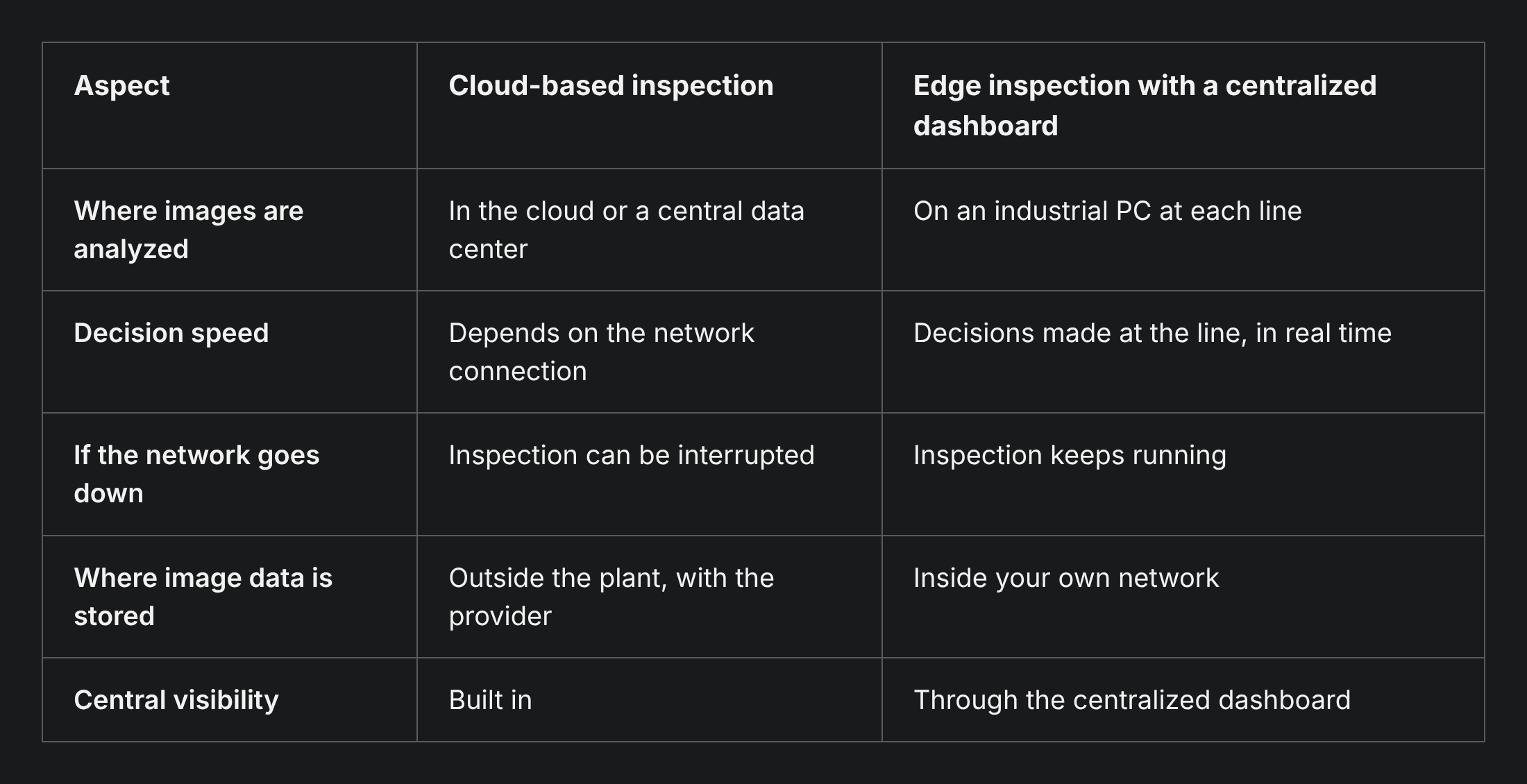
For real-time inspection at line speed, edge inspection with a centralized dashboard combines decisions at the line with one view of every plant.
How to Roll Out Centralized AI Inspection Across Plants
A phased rollout keeps the risk low and the results comparable from the first line onward. Here are the five steps:
- Begin with a Pilot Line: Show that these defects can be effectively identified on one line, with no additional inspection needed besides your existing inspection.
- Define Defect Definitions: Establish, before training models, a list of defect classes and tolerances for all plants.
- Standardize the Hardware: Use the same type of camera, lighting and industrial PC at each inspection point wherever possible.
- Validate at Every Line: Lighting and setups vary from plant to plant, so compare them with pictures from each line before it hits the air.
- Connect All Lines to One Dashboard: If a second line goes live, add a centralized dashboard as soon as the second line is live, so that results are comparable from the beginning.
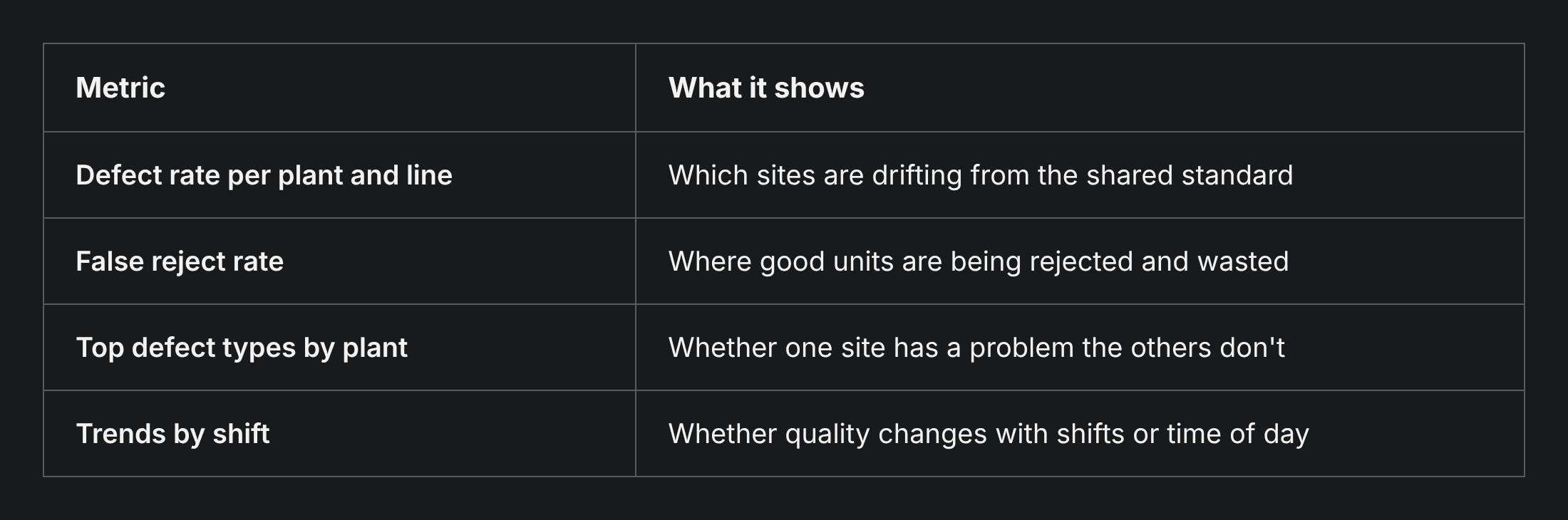
Metrics to Compare Across Plants
Once results from every line are in one place, these are the metrics worth comparing between plants:
How Does xis.ai Deliver Centralized AI Inspection Across Your Plants?
The xis.ai AI inspection platform is built for exactly this setup: inspection runs locally at every line, while models, standards and results are managed centrally.
It is used across many industries, from general manufacturing to food and bakery, consumer goods, pharmaceutical and automotive production.
- xis.dev: No-code annotation and training. Models are built once, validated against held-back images and retrained in-house when the product changes.
- xis.rt: The same models are deployed to every inspection point. Each line runs its own xis.rt at 150 frames per second, fully offline, and signals reject, alarm or line halt to your PLC and MES over OPC-UA and MQTT.
- xis.dashboard: Brings inspection results, images and data from every line, plant and country into one view, hosted on your own servers. It turns that data into actionable insights, such as defect trends, recurring failure patterns and line-by-line performance, so your teams can act on problems earlier, reduce scrap and optimize production.
- Standard hardware: An industrial camera, controlled lighting and an industrial PC with an NVIDIA GPU at each inspection point. Existing equipment can usually be retrofitted.
- Deployment: Zero line stoppage, and each line can be added independently.
For questions about multi-plant dashboards, data storage and starting on one line, see the xis.ai FAQs.
Ready to Standardize Inspection Across Your Plants with xis.ai?
Rolling out inspection across several plants raises practical questions: which line to start with, how to keep defect definitions the same at every site, and how results from each plant come together in one view.
A 30-minute technical call with one of our engineers is the best place to work through them. Bring your line speeds, the defects you need to catch and your integration requirements, and we will help you plan a rollout that fits your plants.
If you would rather start with proof on your own product, send us 20 images of the defect you need to catch for a free feasibility check.
Frequently Asked Questions
What is centralized AI in manufacturing?
Centralized AI means managing AI models, standards and results from one place across many lines or sites. The AI can still run locally at each line, while control and visibility sit centrally.
What is a centralized AI vision platform?
A centralized AI vision platform is software that builds, deploys and monitors vision AI models for every line and plant from one system. It replaces separate, standalone vision systems at each site.
What is AI inspection?
AI inspection is the use of artificial intelligence and cameras to check products for defects automatically. In manufacturing, it replaces or supports manual visual inspection on the production line.
Does centralized AI inspection replace quality inspectors?
No. It takes over repetitive visual checks, while quality teams set the defect standards, review results and act on trends across plants.
Is centralized AI inspection only for large manufacturers?
No. It is useful as soon as the same product is made on more than one line, and the setup can grow one line at a time.