AI-Powered Surface Inspection Systems for Smarter Quality Control

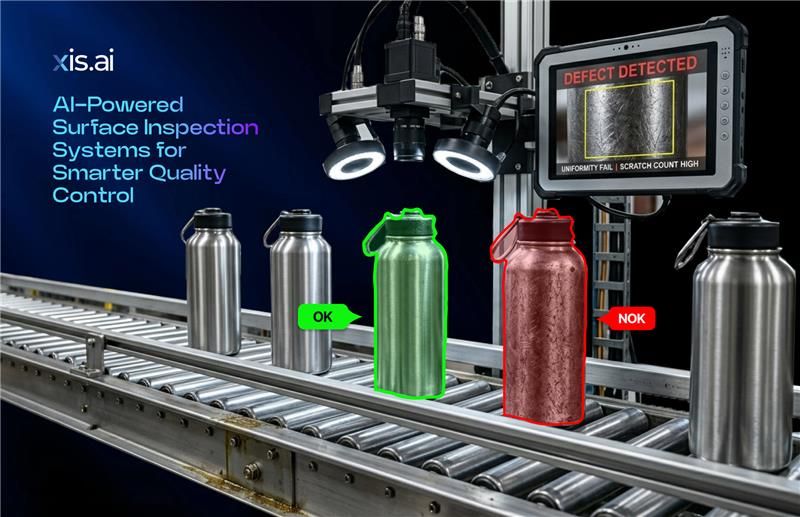
A modern surface inspection system plays a critical role in ensuring product quality, especially in industries where even minor surface defects can lead to rejection or performance issues. However, traditional inspection systems often rely on rigid rules and struggle to handle variations in materials, lighting conditions, and surface textures.
Artificial intelligence is changing this by enabling systems to interpret surfaces more intelligently. Instead of simply detecting deviations, AI allows manufacturers to build adaptive surface quality control manufacturing processes that respond to real production conditions.
What Makes an AI-Powered Surface Inspection System Different?
A conventional surface inspection system operates on predefined thresholds such as contrast, edges, or pixel intensity. These methods work well for uniform products but become unreliable when surfaces vary or when defects are subtle.
AI-powered systems, on the other hand, are trained using real production data. They learn what a “normal” surface looks like and identify deviations based on learned patterns rather than fixed rules. This makes them more robust in dynamic environments.
In finish quality inspection, where defects like micro-scratches, uneven coatings, or texture inconsistencies are common, this learning-based approach delivers significantly more consistent results.
How AI Improves Surface Defect Detection
AI enhances surface defect detection AI by focusing on how surfaces behave rather than how they look in a single frame. It evaluates spatial relationships, texture continuity, and local variations across the surface.
For instance, in painted or coated products, slight variations in reflectivity may not indicate a defect. A rule-based system might flag these as errors, but an AI model can recognize them as acceptable variations based on training data.
Similarly, defects such as scratches, dents, or contamination often appear in irregular forms. AI models are capable of identifying these non-uniform patterns, improving detection accuracy and reducing unnecessary rejection.
This leads to more stable and reliable surface quality control manufacturing, especially in high-precision industries.
For a practical example of how AI models identify defects such as cracks, dents, and texture irregularities, see how AI is applied in real-world inspection workflows: How xis.ai Detects Defects in Metal Parts
The Role of Data in AI Inspection
The performance of an AI-driven surface inspection system depends heavily on the quality of its training data. Unlike traditional systems, which rely on manually defined parameters, AI systems learn directly from examples.
Effective datasets include a wide range of surface conditions, capturing both acceptable variations and actual defects. This allows the system to build a realistic understanding of production variability.
Over time, as more inspection data is collected, manufacturers can refine their models further. This continuous learning process improves the accuracy of surface defect detection AI and ensures that the system remains aligned with evolving production requirements.
Imaging and Detection: What Actually Happens
In an AI-based surface inspection system, the inspection process begins with image acquisition under controlled lighting conditions. Lighting plays a crucial role, as it highlights specific surface features such as texture, edges, or reflectivity.
Once images are captured, they are processed by AI models that extract meaningful features. These features may include texture gradients, intensity variations, or structural patterns. The system then compares these features against what it has learned during training.
If a deviation is detected, the system classifies it based on its characteristics. This classification step is particularly important for finish quality inspection, as it helps manufacturers understand not just whether a defect exists, but what type of defect it is.
Real-Time Inspection in Production Environments
A key requirement for any surface inspection system is the ability to operate in real time. AI models are designed to process image data quickly, enabling immediate feedback during production.
This allows manufacturers to identify defects as they occur and take corrective action without interrupting the production flow. Instead of relying on post-production checks, quality control becomes an integrated part of the manufacturing process.
As a result, surface quality control manufacturing becomes more responsive, reducing the risk of large batches of defective products.
Similar real-time inspection principles are already being applied across industries where consistent quality control is critical: AI for Food Quality Inspection: Smarter, Safer Production with xis.ai
Improving Consistency in Finish Quality Inspection
Consistency is one of the biggest challenges in inspection processes. Manual inspection can vary depending on operator experience, fatigue, or environmental conditions. Even traditional automated systems may struggle with changing production variables.
AI-driven surface inspection systems address this by applying the same learned criteria across all inspections. Once trained, the system evaluates every product using consistent standards, regardless of external conditions.
This ensures uniform finish quality inspection, which is essential for maintaining product reliability and meeting industry standards.
From Detection to Process Insight
An advanced surface inspection system does more than detect defects—it also generates valuable data about the production process.
By analyzing inspection results over time, manufacturers can identify patterns such as recurring defect types or process-related issues. For example, repeated defects in a specific area of a product may indicate a problem with tooling or material handling.
This insight allows manufacturers to move beyond detection and improve overall surface quality control manufacturing, making the process more efficient and controlled.
Challenges to Consider
Implementing an AI-powered surface inspection system comes with certain challenges that need to be addressed carefully:
- Ensuring high-quality and well-labeled training data
- Integrating AI systems with existing production infrastructure
- Managing variations in lighting and environmental conditions
- Handling rare or previously unseen defects
- Interpreting AI decisions in critical quality scenarios
Addressing these factors is essential for achieving reliable surface defect detection AI and consistent inspection performance.
The Future of Surface Inspection Systems
The next phase of the surface inspection system focuses on deeper integration with manufacturing processes. AI systems are increasingly being connected with production data, enabling them to identify conditions that lead to defects.
This shift allows manufacturers to take preventive action, reducing the likelihood of defects before they occur. As a result, finish quality inspection becomes part of a broader strategy focused on process optimization rather than just defect detection.
Over time, this approach will redefine how surface quality control manufacturing is managed, making it more predictive and efficient.
Conclusion
AI is fundamentally transforming how a surface inspection system operates—from a static detection tool into an adaptive, data-driven quality engine. By enabling deeper surface defect detection AI, manufacturers can achieve more consistent and reliable finish quality inspection while improving overall process control.
As production environments become more complex, the ability to learn from data and adapt in real time is no longer optional. This is where solutions from xis.ai play a crucial role, helping manufacturers implement intelligent inspection systems that align with modern surface quality control manufacturing demands.
Frequently Asked Questions
What is a surface inspection system?
A surface inspection system is used to detect defects or inconsistencies on product surfaces using imaging and analysis technologies, often enhanced with AI.
How does AI improve surface defect detection?
AI improves surface defect detection AI by learning patterns, adapting to variations, and identifying complex defects more accurately than traditional systems.
What industries use surface inspection systems?
Industries such as automotive, electronics, metals, and packaging rely on surface inspection systems for effective finish quality inspection.
What types of defects can AI detect on surfaces?
AI can detect scratches, cracks, coating issues, contamination, and subtle texture variations, improving surface quality control manufacturing.
Is AI-based surface inspection better than manual inspection?
Yes, AI offers more consistent, faster, and scalable inspection compared to manual methods, especially for detailed finish quality inspection.
Comment
0Comments
No comments yet.