AI for Food Quality Inspection: Smarter, Safer Production with xis.ai
Recent Post:

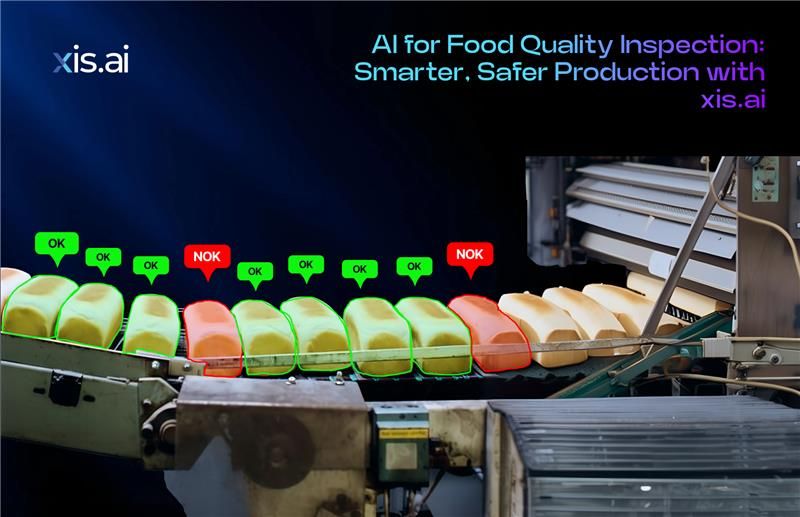
A modern food quality inspection system is becoming essential as food manufacturers face increasing pressure to deliver safe, consistent, and high-quality products at scale. A traditional food quality inspection system often relies on manual checks, which can be slow and prone to human error.
With artificial intelligence, inspection processes are now faster, more accurate, and scalable. Platforms like xis.ai are enabling manufacturers to move toward intelligent, automated quality control that aligns with smart factory goals.
What Is an AI-Powered Food Quality Inspection System?
A food quality inspection system powered by AI uses machine learning and computer vision to automatically analyze food products in real time. Instead of relying on human inspection alone, the system evaluates visual and structural data instantly.
At its core, the system combines advanced imaging with intelligent algorithms to detect defects and ensure consistency across production batches.
Key components include:
- High-speed cameras and sensors
- AI-based image processing models
- Real-time defect detection software
- Automated sorting and reporting
These components work together to create a seamless inspection workflow without slowing production.
How AI Food Inspection Works
AI food inspection follows a structured yet highly efficient process that ensures every product is evaluated consistently.
First, images of food products are captured using high-resolution cameras integrated into the production line. These images are then analyzed by AI models trained to identify acceptable and defective patterns.
The system can:
- Detect variations in color, texture, and shape
- Identify contamination or foreign objects
- Classify defects instantly
- Trigger automated rejection or sorting
This real-time capability allows manufacturers to maintain quality without interrupting throughput.
The Role of Vision Systems in the Food Industry
A vision system food industry solution acts as the foundation of any AI-powered inspection setup. It enables machines to “see” and interpret product quality with a level of precision that manual inspection cannot match.
In a modern food quality inspection system, vision technology ensures that even subtle inconsistencies are detected early. This is especially important in high-speed production environments where manual inspection is not feasible.
Common Defects Detected by AI
A food quality inspection system powered by AI can detect a wide range of issues that impact both quality and safety.
These include:
- Discoloration and bruising
- Irregular shapes or sizes
- Foreign materials such as plastic or metal
- Surface contamination
- Packaging and sealing defects
With food defect detection AI, even minor flaws are identified before they reach consumers, reducing risk and improving brand reliability.
Benefits of AI-Based Food Quality Inspection Systems
A food quality inspection system built on AI delivers measurable improvements across operations. It not only enhances inspection accuracy but also supports long-term efficiency and cost reduction.
From an operational perspective, AI reduces dependency on manual labor while ensuring consistent inspection outcomes. At the same time, it provides valuable data insights that help manufacturers optimize their processes.
Key advantages include:
- Higher inspection accuracy and consistency
- Faster processing with real-time results
- Reduced waste and rework
- Lower operational costs
- Scalable performance for high-volume production
AI vs Traditional Food Inspection
A traditional food quality inspection system struggles to keep up with the demands of modern production. Manual inspection is often inconsistent and difficult to scale.
In contrast, AI-driven systems offer real-time processing, consistent accuracy, and the ability to handle large volumes without performance loss. This makes them a more reliable and future-ready solution for food manufacturers.
Industry Applications
AI-powered food quality inspection systems are widely used across different segments of the food industry. Their flexibility allows them to adapt to various product types and inspection requirements.
Common applications include:
- Fresh produce sorting based on quality and ripeness
- Meat and poultry inspection for contamination
- Bakery product consistency checks
- Packaged food inspection for sealing and labeling
These applications highlight how AI is improving both product quality and operational efficiency.
Challenges and Considerations
While adopting a food quality inspection system offers significant benefits, manufacturers must consider certain factors during implementation.
Initial setup costs, system integration, and the need for high-quality training data can pose challenges. However, platforms like xis.ai are designed to simplify deployment and reduce these barriers over time.
The future of AI food inspection is closely linked to the rise of smart factories and connected production systems. As AI continues to evolve, inspection systems will become more predictive, automated, and integrated.
Manufacturers looking to stay ahead should explore how AI fits into broader digital transformation strategies.
Conclusion
A modern food quality inspection system powered by AI is transforming how food manufacturers ensure safety, quality, and efficiency. By leveraging AI food inspection, advanced vision system food industry technologies, and food defect detection AI, companies can achieve consistent and scalable quality control.
Solutions from xis.ai make it easier for manufacturers to transition from manual inspection to intelligent, data-driven processes—unlocking higher productivity and better outcomes.
Frequently Asked Questions
1. What is a food quality inspection system?
A food quality inspection system is used to evaluate food products for defects, contamination, and quality compliance during production.
2. How does AI improve food inspection?
AI food inspection enables real-time analysis, improves accuracy, and reduces human error in quality control processes.
3. What is a vision system in the food industry?
A vision system food industry solution uses cameras and AI to inspect food products for defects and inconsistencies.
4. What defects can AI detect in food products?
Food defect detection AI can identify discoloration, contamination, irregular shapes, and packaging issues.
5. Is AI-based food inspection reliable?
Yes, AI-powered food quality inspection systems provide consistent, accurate, and scalable inspection results.
Comment
0Comments
No comments yet.