PCB Defect Detection Is No Longer Just About Quality Control
Recent Post:

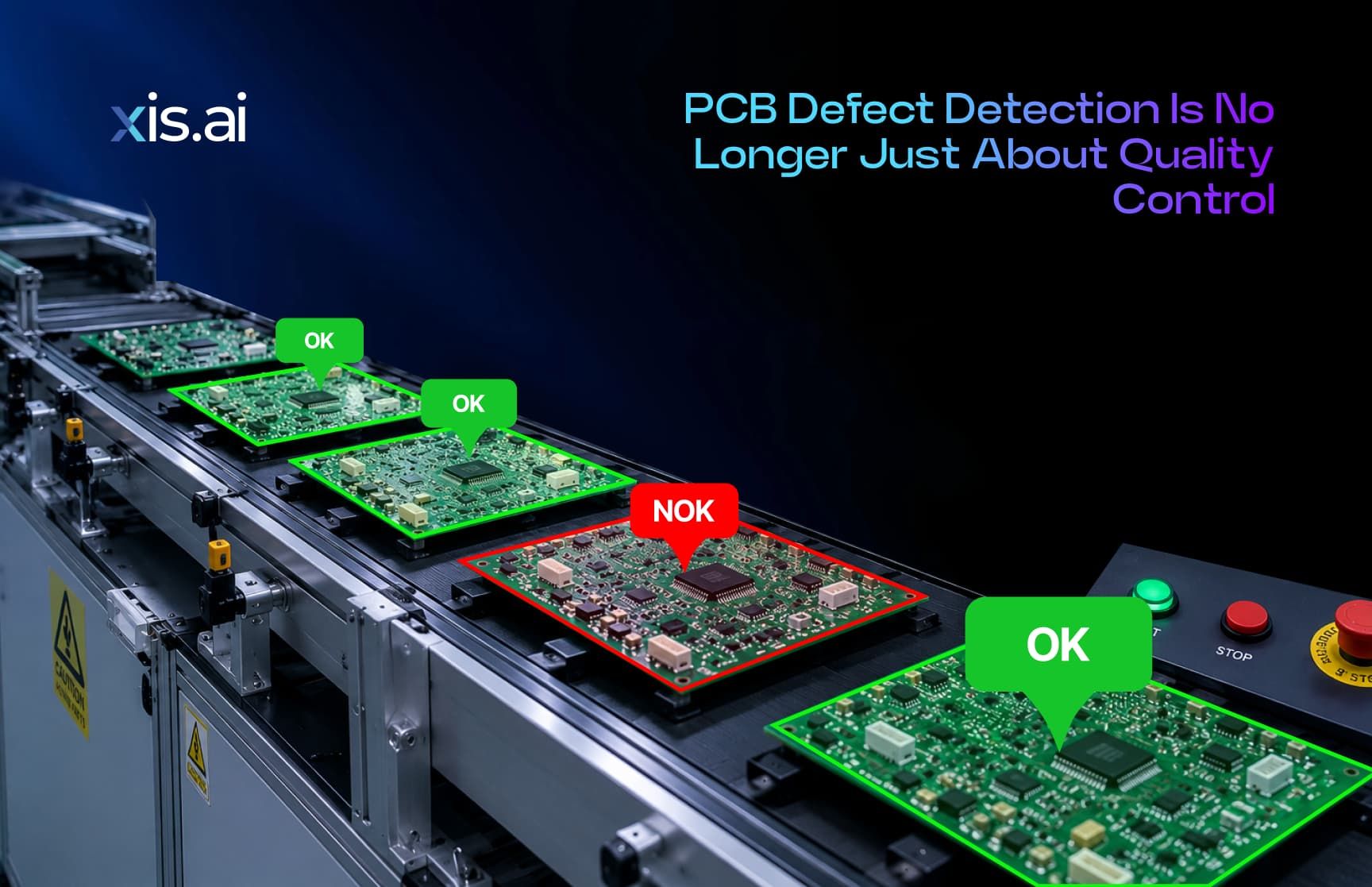
Defective circuit boards are costly for electronics manufacturers, but not necessarily for obvious reasons.
While most debates surrounding PCB defect detection deal with quality control issues or inspecting errors, within electronics factories, the problem lies elsewhere. Defects often hint at more serious issues within the manufacturing process rather than being random occurrences.
For example, a solder defect suggests that the stencil used during the printing process has been worn out. Component misplacement may imply that pick-and-place equipment needs adjustment. Surface defects may indicate that there are conveyor or environmental stability issues.
That's why contemporary manufacturers are shifting their mindset when it comes to the purpose of inspection procedures.
Instead of approaching PCB inspection as a means of quality verification or defect detection, manufacturers have started using smart technologies to gain valuable insights about the status of the production process.
That represents a major paradigm shift within the industry.
The Hidden Cost of PCB Defects
PCB failure usually translates to rejection of products in most people’s minds, yet the effects financially run far deeper than this.
Defects that are found later during the manufacturing process are more costly compared to those found at an earlier stage. In case a defective board makes its way to other processes such as testing and shipping, it becomes even more costly.
Manufacturers often face:
- Rework costs
- Production delays
- Material waste
- Engineering investigation time
- Increased testing overhead
- Shipment delays
- Warranty claims
- Customer dissatisfaction
This issue arises when working in strictly controlled industries such as automotive electronics and medical device applications, where one flaw can cause a problem from both compliance and safety perspectives.
The problem that has developed in this situation is that modern manufacturing environments for PCBs create flaws that have become increasingly hard to detect.
Why Conventional PCB Inspection Creates Bottlenecks
However, many manufacturers of electronics continue to use conventional AOI systems in addition to manual workflows. Although such systems are well-proven and have been used for a long time, they do not fit modern production environments at all.
Current production line rates are higher; component densities have increased; and products' variation rates are unpredictable.
Standard inspection systems tend to be operated on the basis of preset values of defect’s parameters and thresholds. The point is that actual manufacturing conditions vary constantly.
Even a slight change in lighting, reflective boards, their layout, types of solders used, etc., can influence system accuracy. In the end, manufacturers must devote much time to calibration and re-check false reject components manually.
Therefore, there appears to be another unobvious challenge for companies – inspection turns into a bottleneck process for production.
As a result, instead of increasing efficiency, engineering teams waste time on system maintenance and troubleshooting.
These constraints are fueling the adoption of adaptive computer vision systems in industrial automation contexts. Learn how AI-powered vision systems enable flexible manufacturing automation: The Role of Computer Vision in Automation
AI Changes Inspection From Static to Adaptive
This is where the use of AI-driven PCB inspection systems brings in a revolution.
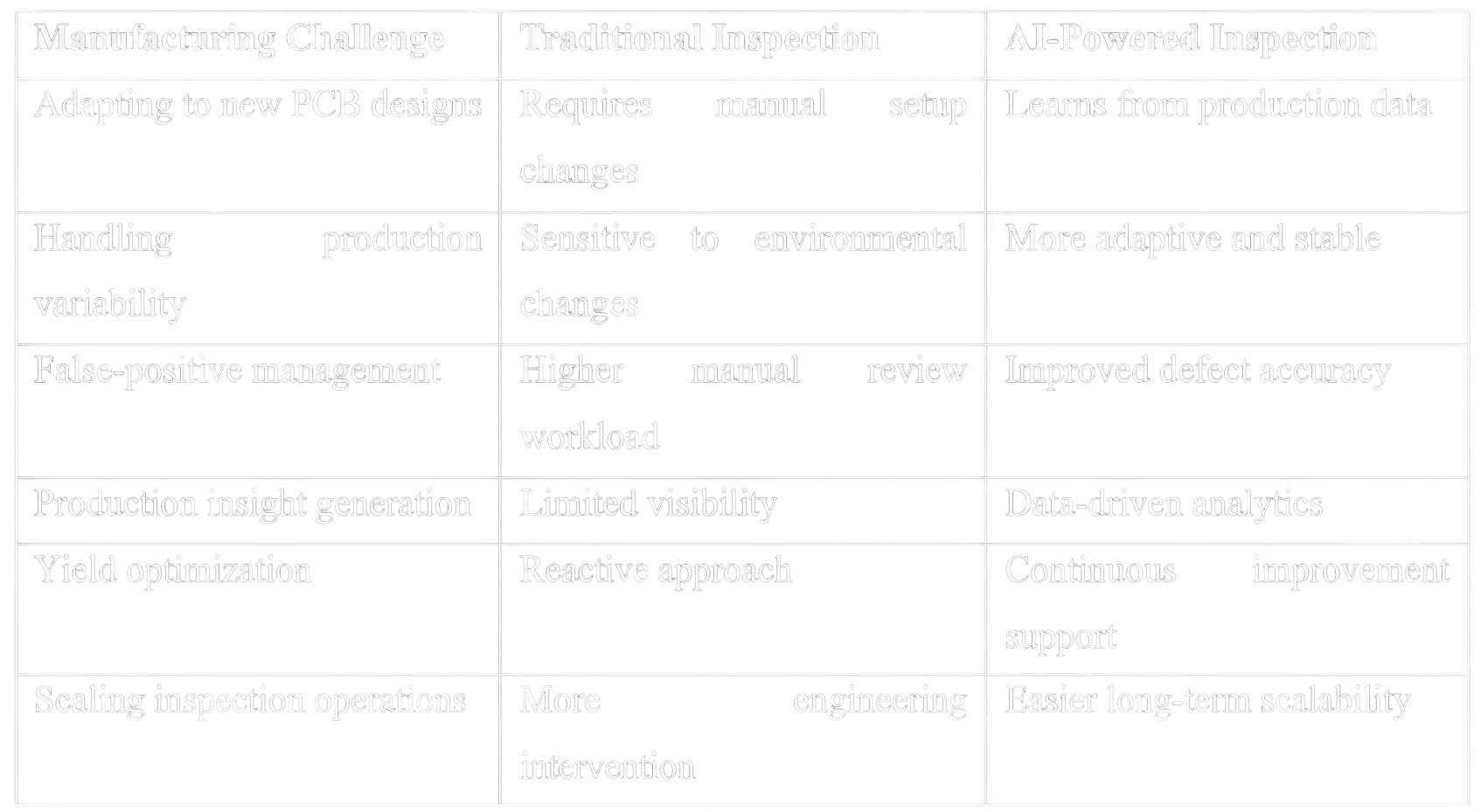
Unlike traditional PCB inspection systems that depend on rigid programming logic, AI algorithms can analyze actual production data and find patterns and anomalies.
However, the true strength of such systems lies elsewhere. It is adaptability.
Contemporary AI-based inspection solutions for electronic boards can keep learning and improving even as production requirements change. In contrast to constant programming changes needed with conventional systems, such an approach proves superior in situations when multiple types of boards are used and produced.
For a deeper understanding of how these intelligent inspection systems work in industrial settings, check out: Overview of an AI Vision Inspection System
Inspection Data Is Becoming a Manufacturing Asset
Among the developments taking place at advanced electronics plants is the increasing significance of the data created through inspections.
In the past, inspection systems mainly answered one question:
“Is this board defective?”
Today, manufacturers want much deeper insights..
They want to know:
- Why defects are increasing
- Which machines are causing instability
- Which production shifts generate higher failure rates
- Whether environmental conditions affect solder quality
- Which suppliers contribute to recurring defects
- Where production yield losses begin
AI inspection systems facilitate this development since they produce massive amounts of structured visual manufacturing data.
The inspection process is thus converted into an ongoing feedback loop for optimizing manufacturing processes.
AI-based circuit board defect inspection systems have already begun to play a role in manufacturing process planning within several factories.
Yield Optimization Is Becoming More Important Than Inspection Speed
For a long time, inspections were mostly assessed in terms of speed. However, for a growing number of companies, another factor takes priority: yield optimization.
Avoiding defect escapes is critical; yet avoiding excessive rejects could be just as important. Conventional inspection equipment tends to produce high false positives due to its inability to deal with variations in the manufacturing process.
Acceptable boards get marked for manual assessment or rejection. It results in extra effort and additional expenses related to their manufacturing.
AI-based inspections systems alleviate this issue by distinguishing defective products from variations caused by production processes.
As even slight improvements in yield performance lead to substantial savings in the context of electronics production facilities operating on a large scale, AI inspection technology is increasingly seen as an efficiency measure, not just a quality management system.
How xis.ai Supports Intelligent Electronics Inspection
xis.ai creates solutions for inspection and monitoring using artificial intelligence computer vision that will assist manufacturers with automating their processes.
When it comes to the environment where electronics are manufactured, xis.ai creates smart visual inspection systems that increase the visibility of manufacturing and integrate into manufacturing systems.
These solutions can help manufacturers implement:
- AI-powered PCB defect detection
- Intelligent PCB inspection systems
- Electronic board inspection AI
- Automated circuit board defect inspection
- Real-time production monitoring
- AI-driven inspection analytics and yield optimization
Using the power of scalable machine learning and sophisticated computer vision, xis.ai can help manufacturers enhance their manufacturing processes by increasing production consistency, reducing defects, and generating additional insights.
Frequently Asked Questions
What Is PCB Defect Detection?
PCB defect detection uses AI vision systems and computer vision technology to identify defects on printed circuit boards during electronics manufacturing.
How Does A PCB Inspection System Improve Manufacturing?
A PCB inspection system helps manufacturers detect defects early, reduce waste, improve yield, and maintain production consistency.
What Is an Electronic Board Inspection AI?
Electronic board inspection AI uses machine learning models to automate defect detection and analyze PCB manufacturing quality in real time.
Why Is Circuit Board Defect Inspection Important?
Circuit board defect inspection helps prevent defective electronics from moving through production and improves overall product reliability.
Can AI Inspection Systems Reduce False Rejects?
Yes. AI-powered inspection systems can distinguish between true defects and acceptable manufacturing variations more accurately than traditional inspection methods.
Comment
0Comments
No comments yet.