AI vs Manual Inspection: Speed and ROI in USA and Germany

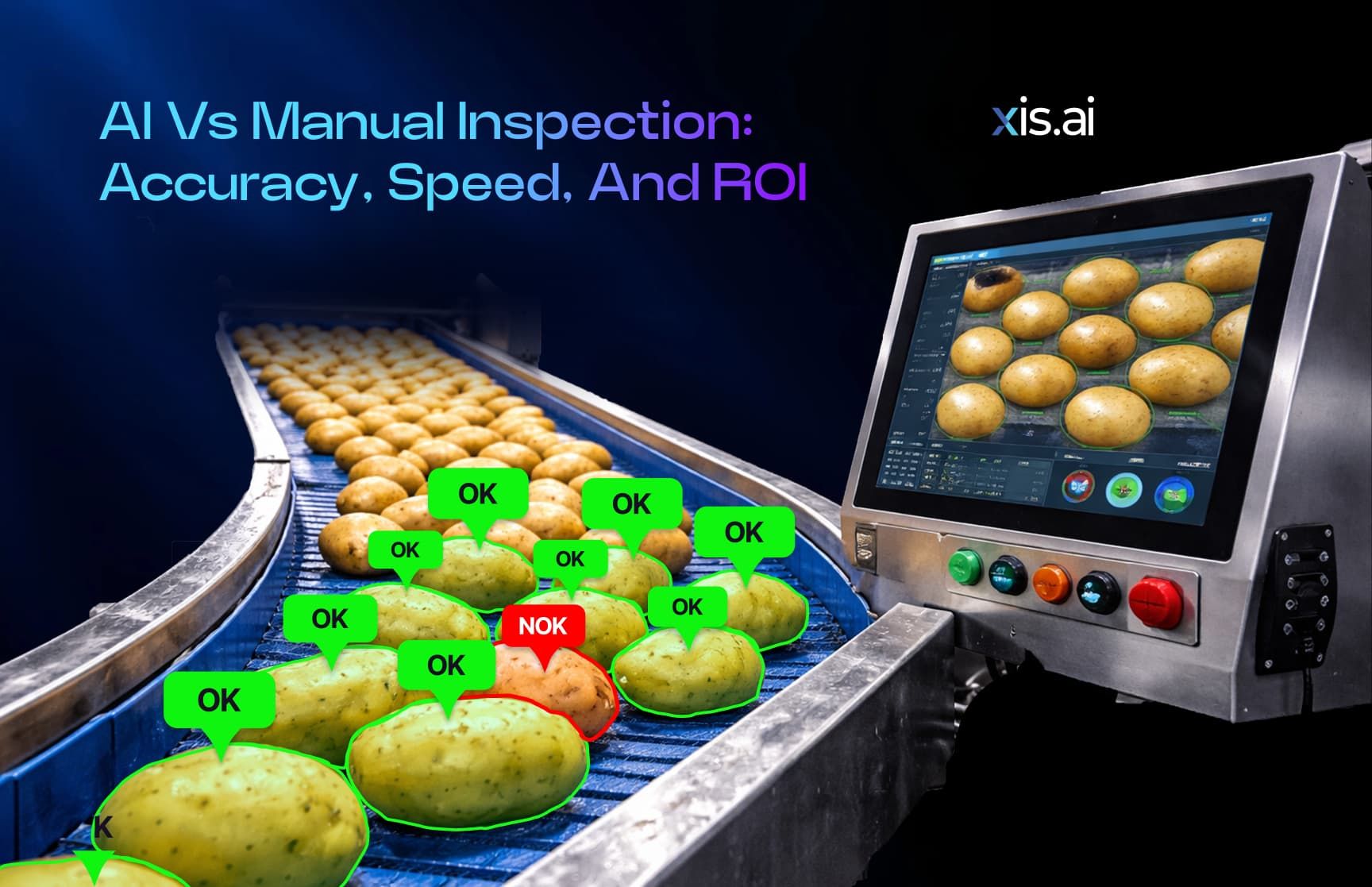
Inspection has traditionally relied on human expertise — trained operators visually identifying defects, interpreting X-ray images, and making judgment-based decisions. While effective to a certain extent, manual inspection is inherently limited by fatigue, subjectivity, and variability.
With increasing product complexity and tighter quality requirements, manufacturers are shifting toward AI-powered inspection systems that bring consistency, scalability, and data-driven decision-making into the process.
Accuracy: Consistency vs Subjectivity
Manual inspection depends heavily on operator experience, which can vary between individuals and over time. Fatigue and repetitive tasks often reduce detection reliability, especially in high-volume environments.
AI-based inspection systems evaluate patterns across large datasets and apply consistent criteria to every inspection. This enables detection of subtle defects, reduces variability, and ensures repeatable outcomes across batches — a critical requirement in industries with strict quality standards.
Speed: Scaling Inspection Without Bottlenecks
Manual inspection is inherently time-intensive, as each component must be reviewed individually. This creates limitations in throughput and can slow down production lines.
AI systems process inspection data in real time or near real time, enabling continuous inspection without interrupting workflows. This allows manufacturers to transition from sampling-based inspection to full inspection, improving coverage without compromising speed.
ROI: A Long-Term Perspective
While manual inspection may seem cost-effective initially, it often involves hidden costs such as labor, training, rework, and defect escape.
AI-driven inspection delivers value over time by reducing these inefficiencies. Lower defect rates, minimized rework, and improved process visibility contribute to stronger operational performance. Additionally, the data generated by AI systems supports ongoing optimization, making quality control more proactive than reactive.
Where Manual Inspection Still Fits
Manual inspection remains relevant in scenarios requiring engineering judgment, such as complex or non-standard defects. It also plays a role in validating AI systems and supporting low-volume production.
In practice, many manufacturers adopt a hybrid approach, combining AI for high-volume tasks with human expertise for interpretation and decision-making.
Conclusion: The Role of xis.ai in Modern Inspection
The future of inspection is not about replacing humans, but about enhancing their capabilities with intelligent systems.
xis.ai enables this transition by combining AI with advanced X-ray and CT inspection technologies. Its solutions are designed to automate defect detection, standardize evaluation processes, and generate actionable insights from inspection data.
By integrating AI into quality control workflows, xis.ai helps manufacturers improve accuracy, increase inspection speed, and achieve measurable ROI. More importantly, it supports a shift toward predictive and data-driven quality assurance, where decisions are based on reliable, repeatable data rather than subjective interpretation.
Frequently Asked Questions
What is the main difference between AI and manual inspection?
Manual inspection relies on human judgment, while AI inspection uses trained algorithms to analyze data consistently and automatically.
Is AI inspection more accurate than manual inspection?
AI offers higher consistency and repeatability, especially in high-volume environments, reducing the chances of missed defects due to human error.
Can AI completely replace manual inspection?
No, AI complements manual inspection. Human expertise is still required for complex cases, validation, and decision-making.
How does AI improve inspection speed?
AI processes data in real time, enabling continuous inspection without slowing down production, unlike manual methods which are time-intensive.
What industries benefit most from AI inspection?
Industries such as automotive, aerospace, electronics, and e-mobility benefit significantly due to their need for high precision and reliability.
Comment
0Comments
No comments yet.