AI Raw Material Inspection Standards for Industry

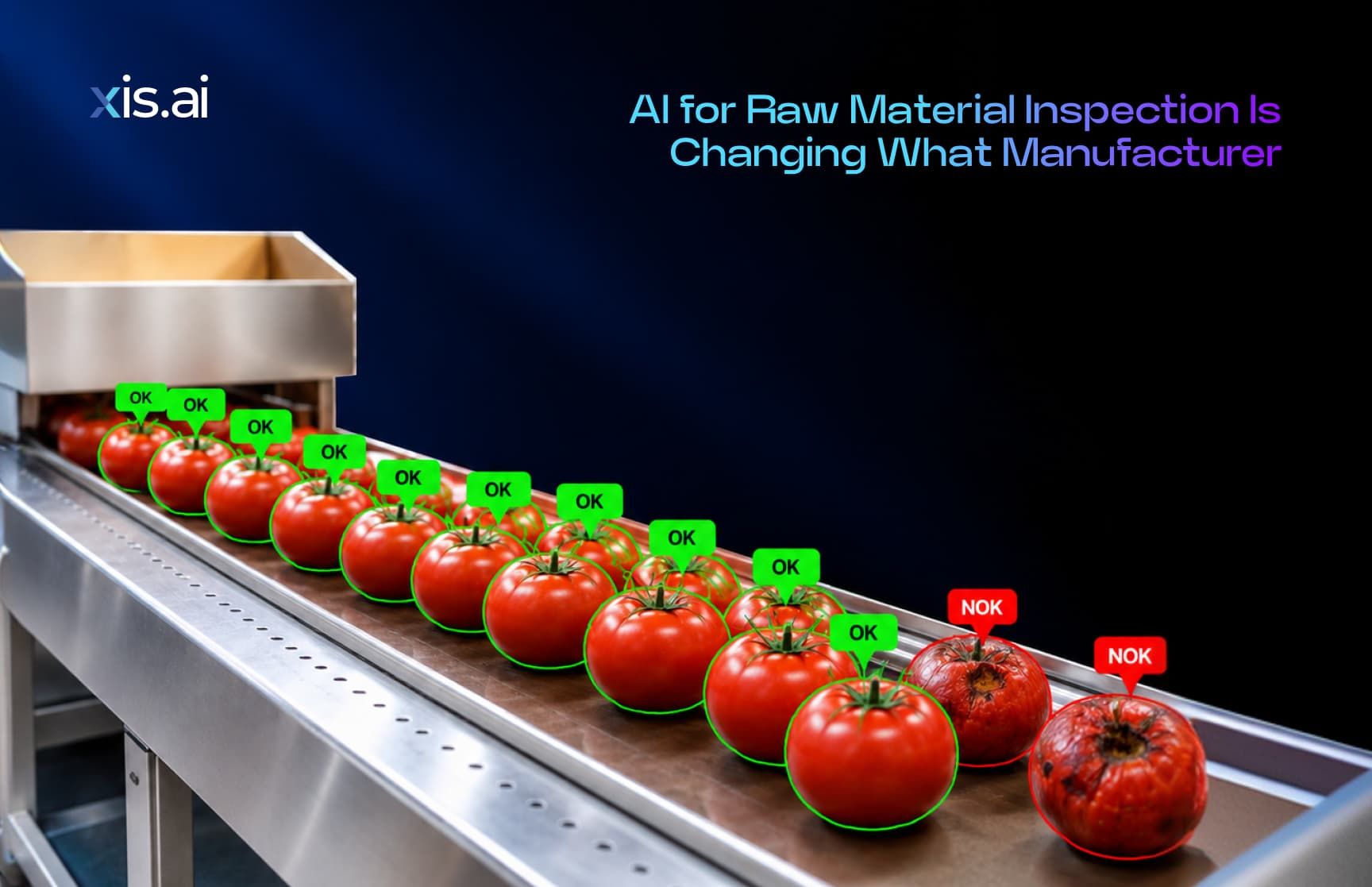
For decades, manufacturers have accepted a difficult reality: incoming raw materials are never perfectly consistent.
Two steel sheets from the same supplier can behave differently during forming. Plastic resin batches may vary in density despite matching specifications. Battery materials that pass standard checks can still create downstream failures weeks later.
Traditional inspection systems were never designed to understand this level of variability. Most factories still depend on fixed tolerance rules, manual sampling, and static inspection criteria. The problem is that modern manufacturing environments are no longer static.
This is where AI is quietly transforming quality control—not by simply automating inspection, but by redefining how manufacturers interpret material quality itself.
The Real Problem Isn’t Defects — It’s Material Variability
Most inspection systems are built to answer a simple question:
“Is this material defective?”
AI approaches the problem differently.
Instead of only detecting obvious failures, intelligent systems analyze patterns, inconsistencies, and behavioral deviations across batches over time. This matters because many manufacturing failures do not come from clearly defective materials. They come from subtle variability that accumulates during production.
A material may technically pass inspection while still causing:
- Excess tool wear
- Inconsistent welding performance
- Coating failures
- Dimensional instability
- Weak bonding strength
- Assembly line stoppages
Modern AI systems are designed to detect these hidden inconsistencies before they create operational problems.
Why Sampling Inspection Is Becoming Obsolete?
One of the least discussed issues in manufacturing is the continued reliance on sampling-based inspection.
In many facilities, only a small percentage of incoming materials are actually checked. The assumption is that inspected samples represent the entire shipment.
That assumption becomes risky when dealing with:
- High-volume global suppliers
- Rapid production cycles
- Complex engineered materials
- Multi-source procurement strategies
AI-powered inspection systems reduce dependence on random sampling by enabling continuous inspection at scale.
Instead of checking five components from a shipment of 5,000, manufacturers can inspect every unit in real time using machine vision and intelligent pattern analysis.
This fundamentally changes the role of inbound material inspection from reactive screening to continuous verification.
AI Learns What Human Inspectors Often Miss
Human inspectors are excellent at identifying visible and familiar defects. But manufacturing environments create conditions where human consistency becomes difficult.
Research across industrial environments has repeatedly shown that inspection accuracy drops due to:
- Repetitive visual tasks
- Shift fatigue
- Lighting variations
- Cognitive overload
- Time pressure
- Subjective judgment differences
AI systems do not experience fatigue or attention drift. More importantly, they improve through exposure.
An advanced inspection model can learn from thousands of historical defect examples, including anomalies that are too subtle for conventional rule-based systems. Many manufacturers are now adopting computer vision systems for surface defect detection to identify subtle material inconsistencies that traditional inspection methods often overlook.
Over time, the system begins identifying patterns that may not even be formally documented within quality manuals.
This creates a major shift in raw material quality control because quality standards stop being entirely dependent on human interpretation.
The Rise of Adaptive Quality Thresholds
Most traditional inspection systems use fixed thresholds.
For example:
- Thickness must remain within a defined range
- Surface defects must not exceed a specific size
- Density values must stay within tolerance limits
But modern production environments are more dynamic than fixed thresholds allow.
AI introduces adaptive quality analysis.
Instead of evaluating materials against rigid rules alone, AI models compare incoming data against broader operational behavior:
- How similar batches performed historically
- Which supplier lots created downstream issues
- How environmental conditions affected production
- Whether a small deviation historically caused failures
This allows manufacturers to move beyond pass/fail inspection toward predictive quality intelligence.
In some cases, AI systems may flag materials that technically meet specifications but show statistical similarities to previously problematic batches.
That level of contextual analysis is difficult with traditional inspection methods.
Supplier Drift Is Becoming a Bigger Manufacturing Risk
A growing challenge in global manufacturing is supplier drift. Supplier drift happens when material quality slowly changes over time without triggering immediate specification violations.
This is especially common when suppliers:
- Change sub-suppliers
- Modify processing conditions
- Adjust raw material sourcing
- Increase production volume
- Introduce new machinery
The changes may appear minor individually, but over months they can affect production stability significantly.
AI-driven supplier quality inspection systems are increasingly being used to monitor these gradual shifts. This becomes even more important for global manufacturers managing multiple facilities where multi-plant quality standardization strategies are essential for maintaining consistent inspection criteria across suppliers and production sites.
Instead of evaluating suppliers only through occasional audits, manufacturers can continuously track:
- Batch consistency patterns
- Surface variation trends
- Material behavior correlations
- Defect frequency evolution
- Statistical quality drift
This transforms supplier management from a reactive process into a data-driven intelligence system.
False Rejects Are Costing More Than Many Factories Realize
One overlooked issue in inspection environments is the cost of false rejects.
A false reject occurs when acceptable material is incorrectly classified as defective.
This creates hidden operational costs such as:
- Unnecessary material waste
- Supplier disputes
- Production shortages
- Delayed manufacturing schedules
- Increased procurement costs
Traditional inspection systems often overcompensate by using conservative rejection rules.
AI systems reduce false rejects by analyzing defects with greater contextual understanding.
For example, instead of rejecting a component because of a surface irregularity alone, AI can evaluate whether that irregularity actually affects performance or downstream manufacturing processes.
This distinction becomes especially valuable in high-precision industries where material costs are substantial.
AI Inspection Is Moving Closer to the Production Line
Another major shift is where inspection happens.
Older inspection models relied heavily on centralized quality labs. Materials were collected, tested separately, and approved before production.
Modern AI inspection systems increasingly operate directly on the production floor through edge computing and real-time imaging systems. This shift toward real-time quality analysis is closely connected with the growth of AI-powered assembly line inspection systems that continuously monitor products without interrupting throughput.
This allows manufacturers to:
- Detect anomalies immediately
- Reduce inspection delays
- Prevent defective material movement
- Improve traceability across production stages
Real-time inspection also creates faster feedback loops between suppliers, procurement teams, and manufacturing operations.
Inspection Data Is Becoming More Valuable Than the Inspection Itself
The future of inspection may not be inspection alone—it may be the intelligence generated from inspection data.
AI systems continuously collect information about:
- Supplier consistency
- Defect evolution
- Process instability
- Environmental effects
- Material performance trends
Over time, this data becomes an operational knowledge system.
Manufacturers can use it to:
- Improve supplier negotiations
- Predict material-related downtime
- Optimize procurement strategies
- Reduce production variability
- Strengthen process engineering decisions
In many factories, inspection is no longer just a quality activity. It is becoming a strategic manufacturing intelligence function.
Why This Shift Matters for Smart Manufacturing?
Industry 4.0 discussions often focus on robotics, automation, and connected factories. But none of those systems perform reliably if material quality remains unpredictable.
AI-driven inspection closes a critical gap between procurement, quality assurance, and production operations.
Rather than treating defects as isolated events, intelligent systems analyze how material behavior affects the entire manufacturing ecosystem.
This creates a more resilient production environment where quality control becomes predictive instead of reactive.
How xis.ai Supports Intelligent Inspection Environments
xis.ai develops AI-powered inspection solutions designed for modern manufacturing complexity.
By combining machine vision, intelligent analytics, and automated inspection workflows, xis.ai helps manufacturers improve visibility into material variability, supplier consistency, and production risk.
Instead of relying solely on static inspection rules, intelligent systems can continuously learn from operational data and adapt to changing manufacturing conditions.
This enables more scalable, data-driven approaches to quality assurance across modern industrial environments.
Frequently Asked Questions
Why are traditional inspection systems struggling in modern manufacturing?
Traditional systems rely heavily on manual inspection, fixed rules, and sampling methods that cannot fully handle increasing material variability and production complexity.
What makes AI inspection different from rule-based inspection?
AI systems analyze patterns, historical behavior, and contextual data instead of only checking fixed thresholds or predefined defect conditions.
What is supplier drift in manufacturing?
Supplier drift refers to gradual changes in material quality or consistency over time that may not immediately violate specifications but still affect production performance.
Can AI reduce false rejects during inspection?
Yes. AI systems can evaluate defects more intelligently, helping manufacturers avoid rejecting materials that are still functionally acceptable.
How does AI improve inbound material inspection?
AI enables faster and more continuous analysis of incoming materials using machine vision, automated defect detection, and real-time quality analytics.
Why is inspection data becoming important in manufacturing?
Inspection data helps manufacturers identify trends, predict risks, improve supplier management, and make more informed production decisions over time.
Comment
0Comments
No comments yet.