AI High-Speed Production Inspection for USA and Germany

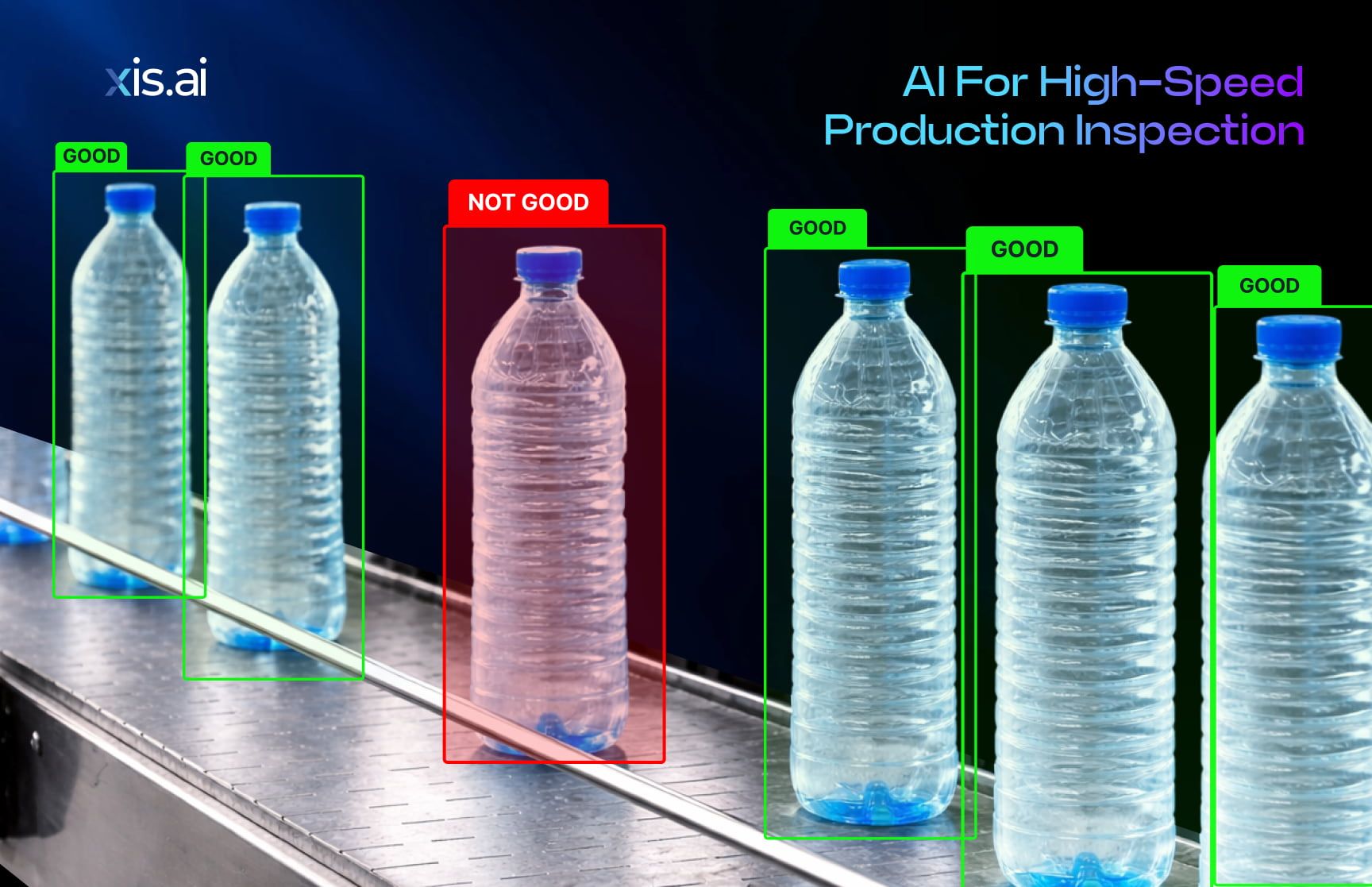
In modern manufacturing, speed isn’t just a competitive advantage—it’s a requirement. Production lines are moving faster than ever, and quality control needs to keep up. That’s where a high speed inspection system becomes critical.
At high throughput levels, even a small delay in inspection can create bottlenecks or allow defective products to slip through. Traditional inspection methods simply weren’t built for this pace. AI, however, is changing that—bringing precision and speed together without compromise.
What Is a High Speed Inspection System?
A high speed inspection system is designed to inspect products instantly as they move through production lines operating at high velocities. Instead of slowing the process down, these systems work alongside it—analyzing, detecting, and deciding in milliseconds.
With AI and computer vision, inspection is no longer limited to basic checks. Systems can now identify subtle defects, inconsistencies, and anomalies that would otherwise go unnoticed in fast-moving environments.
Real-Time Inspection in Manufacturing
Real time inspection manufacturing is becoming the new standard. Rather than inspecting products after production, manufacturers are shifting to continuous inspection during the process.
This approach offers clear advantages:
- Defects are caught immediately, not later
- Rework and waste are reduced
- Production efficiency remains uninterrupted
- Quality feedback is instant
AI plays a key role here. It processes visual data on the fly, ensuring every unit is inspected without slowing down the line.
High Throughput, No Compromise
One of the biggest challenges in inspection has always been balancing speed and accuracy. A high throughput inspection system powered by AI removes that trade-off.
These systems are built to handle:
- Thousands of parts per hour
- Complex product variations
- Continuous operation without fatigue
Unlike manual inspection, AI doesn’t lose focus or consistency over time. Every product is evaluated against the same criteria, no matter how fast the line is moving.
Fast Production Inspection AI
Fast production inspection AI is what makes all of this possible. It combines deep learning models with high-speed imaging to analyze products in real time.
What makes it different from traditional automation?
- It learns from data instead of relying on fixed rules
- It adapts to new defects and product changes
- It improves over time with continuous training
This means manufacturers aren’t just inspecting faster—they’re inspecting smarter.
Where It Makes the Biggest Impact
High-speed AI inspection is especially valuable in industries where volume and precision go hand in hand:
- Electronics manufacturing
- Automotive assembly
- Packaging and consumer goods
- Medical device production
In these environments, even a minor defect can have serious consequences. AI ensures that speed never comes at the cost of quality.
Choosing the Right System
Not all inspection systems are built for high-speed environments. When evaluating a high speed inspection system, it’s important to look beyond basic features.
Focus on:
- Processing speed: Can it keep up with your line rate?
- Accuracy: Does it minimize false positives and misses?
- Integration: Will it fit into your existing setup?
- Scalability: Can it grow with your production needs?
The right system should feel like part of your production line—not a separate step.
What’s Next
AI-powered inspection is still evolving. As hardware becomes faster and models become more advanced, high speed inspection systems will continue to improve.
We’re already seeing:
- Greater use of edge AI for instant decisions
- Better handling of complex and variable products
- Increased automation across entire production lines
The direction is clear—inspection is becoming faster, more intelligent, and fully integrated into manufacturing itself.
Speed and quality no longer must compete. With the rise of AI, manufacturers can rely on a high speed inspection system that keeps up with production while maintaining consistent accuracy. From real time inspection manufacturing to high throughput inspection systems, the shift is clearly toward smarter, faster, and more integrated quality control.
This is where platforms like xis.ai come into play. xis.ai focuses on making AI-powered visual inspection practical for real production environments—helping manufacturers deploy fast production inspection AI without complex setups or heavy customization. By combining computer vision, no-code workflows, and scalable deployment, it enables teams to bring real-time, high-speed inspection directly into their existing lines.
As production demands continue to grow, solutions like xis.ai make it easier to adopt AI without disrupting operations—turning inspection into a seamless, intelligent part of the manufacturing process.
Frequently Asked Questions
1. What is a high speed inspection system?
It’s a system designed to inspect products in real time on fast-moving production lines without slowing down operations.
2. How does real time inspection manufacturing work?
It uses AI and sensors to inspect products during production, allowing immediate detection and correction of defects.
3. Can high throughput inspection systems maintain accuracy?
Yes. AI-powered systems maintain consistent accuracy even at very high production speeds.
4. What industries benefit most from fast production inspection AI?
Industries like electronics, automotive, and packaging benefit the most due to high volumes and strict quality requirements.
5. Does AI inspection require major system changes?
Not necessarily. Many modern solutions integrate with existing production lines and equipment.
Comment
0Comments
No comments yet.