Real-Time Local AI Inspection for USA and Germany Plants

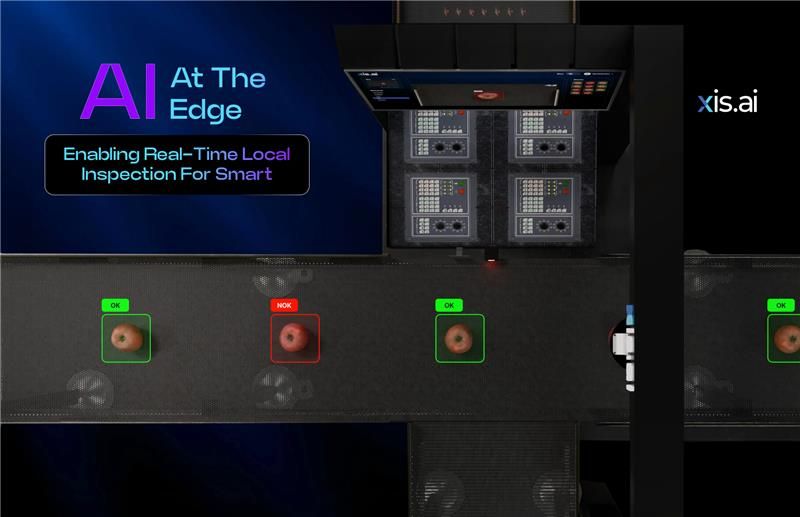
AI at the edge is changing how manufacturers perform quality inspection by enabling real-time analysis directly on the production floor. Traditional inspection systems often send data to centralized servers or the cloud for processing, which can introduce delays.
By running AI models on local devices such as industrial PCs or smart cameras, manufacturers can detect defects instantly during production. This allows faster decision-making, reduced downtime, and improved product quality.
As factories move toward smarter and more automated operations, AI at the edge is becoming an essential technology for efficient and reliable inspection systems.
What Is AI at the Edge?
AI at the edge refers to running artificial intelligence models on devices located near the source of data generation rather than relying on cloud-based processing.
In manufacturing, these edge devices may include:
• Industrial computers
• Smart vision cameras
• Embedded AI processors
• Edge gateways connected to production lines
By processing inspection data locally, AI at the edge enables faster responses and reduces dependence on network connectivity.
Why Real-Time Inspection Matters
AI at the edge allows manufacturers to detect defects immediately during production.
On high-speed production lines, delays in inspection can lead to large batches of defective products. Real-time local inspection helps prevent this by identifying issues as soon as they occur.
With edge AI systems, manufacturers can:
• Detect defects instantly
• Reduce scrap and rework
• Maintain consistent product quality
• Improve production efficiency
Key Benefits of AI at the Edge
Faster Inspection: AI at the edge processes inspection data locally, eliminating delays caused by cloud processing and enabling immediate defect detection.
Reduced Network Dependency: Edge systems do not rely heavily on internet connectivity, making inspection more reliable in industrial environments.
Improved Data Security: With AI at the edge, sensitive production data remains within the factory instead of being transmitted externally.
Scalable Quality Control: Edge-based inspection systems can be deployed across multiple production lines to monitor quality consistently.
Implementation Challenges
Despite its benefits, implementing AI at the edge can present challenges.
Hardware Constraints: Edge devices have limited computing resources compared to cloud systems, requiring optimized AI models.
System Integration: Existing production systems and inspection equipment may require adaptation to support edge AI solutions.
Model Maintenance: AI models need regular updates to maintain inspection accuracy as production conditions change.
How xis.ai Supports Edge AI Inspection
Implementing AI at the edge becomes easier with platforms designed for industrial AI vision. xis.ai enables manufacturers to build, train, and deploy computer vision models that run on edge devices for real-time inspection. By simplifying data annotation, model training, and deployment, the platform helps quality teams quickly implement automated defect detection and scale AI-driven inspection across manufacturing operations.
Conclusion
AI at the edge enables manufacturers to perform real-time inspection directly on production lines, improving defect detection speed and overall quality control. By processing inspection data locally, manufacturers reduce latency, enhance reliability, and maintain consistent product quality. With platforms like xis.ai, organizations can adopt edge-based AI inspection more efficiently and scale intelligent quality control across modern manufacturing environments.
Frequently Asked Questions
What Is AI at the Edge?
AI at the edge refers to running artificial intelligence models on local devices near where data is generated instead of processing it in the cloud.
Why Is Edge AI Useful in Manufacturing?
Edge AI enables real-time inspection, allowing manufacturers to detect defects immediately during production.
What Devices Are Used for Edge AI?
Common devices include industrial PCs, smart cameras, embedded AI processors, and edge gateways.
Can Edge AI Work Without Internet Connectivity?
Yes. Edge AI systems can perform inspections locally without requiring constant internet access.
Comment
0Comments
No comments yet.