Emerging Trends in Industrial AI Inspection

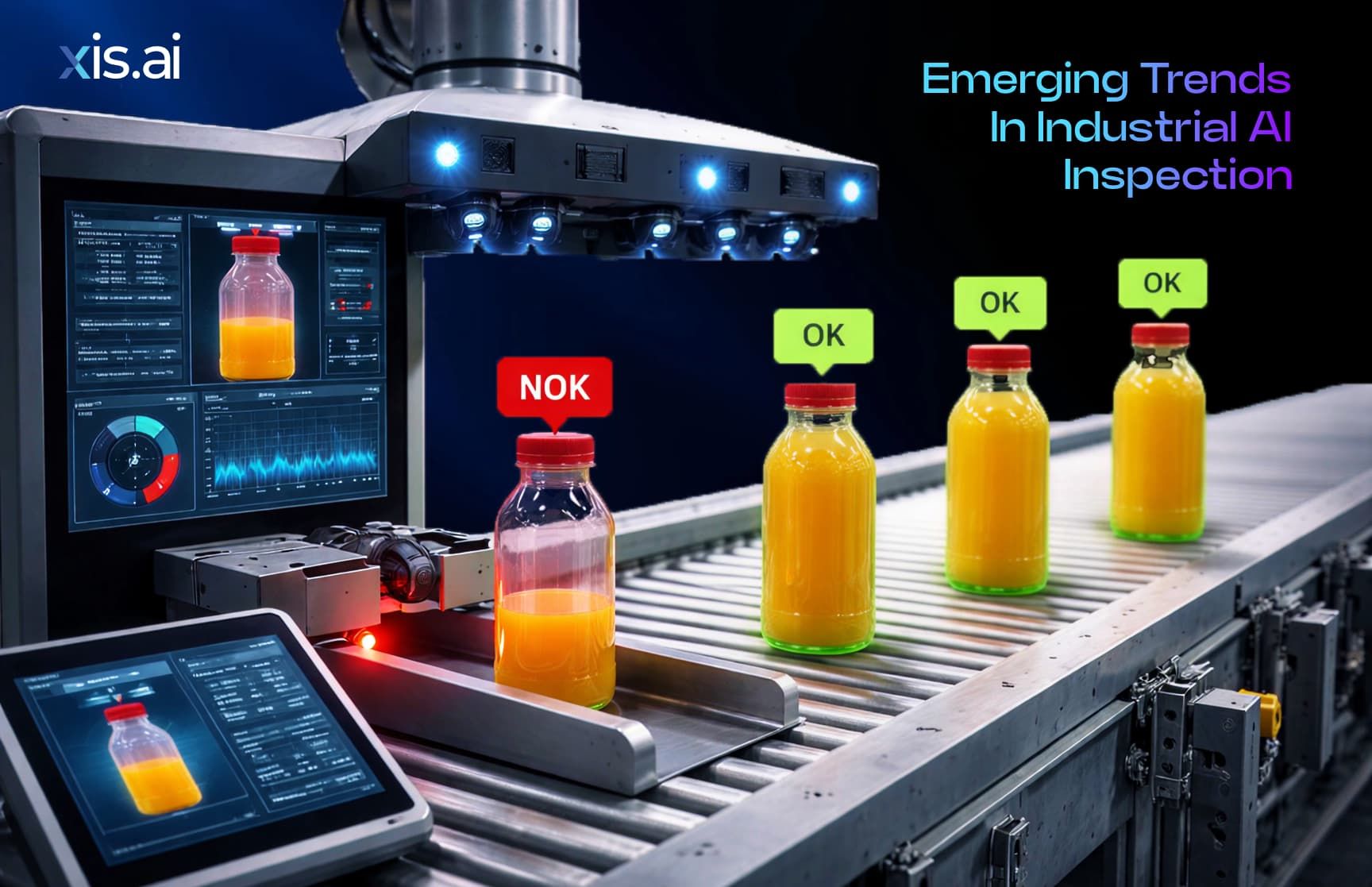
Industrial AI inspection is rapidly evolving as manufacturers move beyond traditional rule-based vision systems toward adaptive, data-driven quality control. Advances in computer vision, edge computing, and automated model training are enabling inspection systems that learn continuously and respond to complex production environments.
For manufacturers aiming to reduce defects and improve efficiency, these emerging technologies are redefining how quality inspection is designed and deployed.
Edge-Based AI Inspection
One of the most important trends in industrial AI inspection is the shift toward edge AI deployment.
Instead of sending inspection images to centralized servers, AI models now run directly on production-line hardware such as industrial PCs or smart cameras.
This enables:
- Real-time defect detection
- Low-latency decision making
- Reduced network dependency
Edge-enabled inspection systems allow manufacturers to maintain high-speed production while ensuring immediate quality verification.
No-Code AI Vision Development
Traditional AI development often requires specialized machine learning expertise. A growing trend in industrial AI inspection is the rise of no-code AI platforms that allow quality engineers to build inspection models without programming.
These platforms streamline the workflow by enabling teams to:
- Upload inspection images
- Annotate defects visually
- Train AI models automatically
- Deploy models to production environments
Solutions like xis.ai follow this approach, enabling manufacturing teams to create and deploy AI inspection systems quickly without complex development pipelines.
Adaptive AI Models
Manufacturing conditions frequently change due to new materials, product variants, or production adjustments.
Modern industrial AI inspection systems are moving toward adaptive AI models that continuously learn from new inspection data. Instead of remaining static, these models can be retrained and optimized to maintain accuracy as production conditions evolve.
This shift helps maintain inspection reliability in dynamic manufacturing environments.
Multi-Modal Inspection Systems
Another emerging trend is the integration of multiple inspection modalities.
Instead of relying solely on visual inspection, AI systems increasingly combine:
- Vision inspection
- Sensor data
- Thermal imaging
- Dimensional measurements
By combining different data sources, industrial AI inspection systems can detect subtle defects that traditional inspection methods may miss.
Conclusion
The future of industrial AI inspection lies in systems that are intelligent, adaptive, and easy to deploy. Edge computing, no-code AI development, and adaptive learning models are enabling manufacturers to automate inspection with greater flexibility and speed. Platforms like xis.ai are at the center of this transition, helping quality teams build and deploy scalable AI inspection workflows that keep pace with modern manufacturing demands.
Frequently Asked Questions
What Is Industrial AI Inspection?
Industrial AI inspection uses machine learning and computer vision to automatically detect defects and monitor product quality during manufacturing.
Why Is Edge AI Important for Inspection?
Edge AI enables real-time defect detection by processing inspection data directly on production-line devices.
What Is a No-Code AI Inspection Platform?
A no-code AI platform allows engineers to train and deploy AI inspection models without writing complex machine learning code.
Comment
0Comments
No comments yet.