AI Cosmetic Packaging Inspection for Beauty and Personal Care Manufacturing

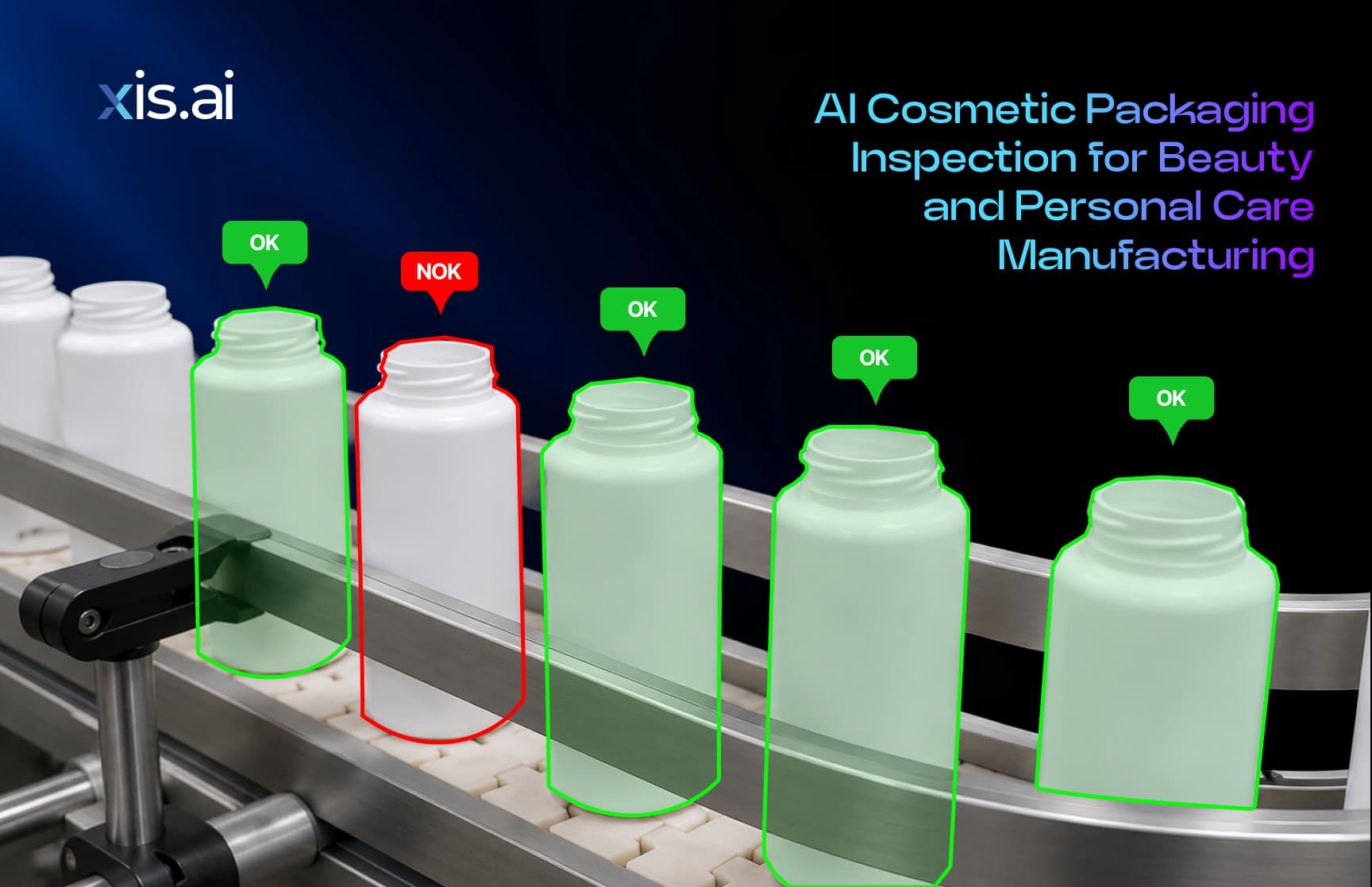
In the beauty and personal care industry, packaging is typically a customer’s first interaction with a brand.
Before evaluating a skincare formula, testing a fragrance, or applying a cosmetic product, consumers first interact with the packaging. The appearance of the bottle, carton, label, cap, and printed information shapes perceptions of quality, authenticity, and brand value.
For premium and luxury brands, packaging quality is especially important. A misaligned label, scratched container, defective closure, or printing error can undermine customer confidence, even if the product meets all quality standards.
As cosmetic manufacturers scale production and expand product portfolios, maintaining packaging consistency becomes more challenging. This has increased interest in AI-powered inspection systems that identify defects more quickly and accurately than traditional methods.
Why Packaging Quality Matters in Cosmetics
Unlike many consumer products, cosmetics rely heavily on presentation.
Packaging influences purchasing decisions, brand perception, and customer trust. It also protects formulations from contamination, leakage, and environmental exposure.
A packaging defect can create multiple business challenges:
- Reduced customer confidence
- Product returns
- Brand reputation concerns
- Retail compliance issues
- Additional rework and waste
For manufacturers in competitive markets, maintaining packaging consistency is essential for product quality and brand protection.
Consumers may not see the manufacturing process, but they immediately notice visible packaging imperfections.
Common examples include:
- Crooked or wrinkled labels
- Scratched bottles and containers
- Damaged cartons
- Missing caps or pumps
- Incorrect product coding
- Printing defects
- Packaging contamination
- Closure alignment issues
Consumers purchasing premium skincare products expect packaging to reflect the brand’s quality promise. Even minor defects can create a negative first impression.
The Challenge of Inspecting High-Volume Cosmetic Production
Modern cosmetic manufacturing facilities often produce thousands of units per hour across multiple product lines.
A single production site may package:
- Skincare products
- Cosmetics
- Haircare products
- Fragrances
- Personal care items
Each product category may require different packaging formats, materials, colors, and labeling specifications.
Maintaining inspection consistency amid this variation is challenging, especially when relying on manual inspection processes.
How AI Is Improving Cosmetic Defect Detection
Traditional inspection systems typically rely on predefined rules and fixed quality parameters. While effective for many applications, they often require adjustments when packaging designs, materials, or product variations change.
AI-powered inspection systems offer a more adaptable approach.
With computer vision and machine learning, modern cosmetic defect detection systems evaluate packaging quality in real time and identify subtle visual anomalies that are often missed during manual inspection.
Inspection capabilities may include:
- Label verification
- Print-quality assessment
- Cap and closure inspection
- Surface defect detection
- Packaging alignment verification
- Barcode validation
- Packaging completeness checks
This enables manufacturers to enhance quality assurance while maintaining production efficiency.
Customer demands within the beauty industry continue to evolve. Social media, online reviews, and direct-to-consumer sales channels have increased the visibility of packaging quality issues. A single image of a defective product shared online can quickly influence brand perception.
As a result, manufacturers are increasingly investing in beauty product inspection AI solutions to strengthen quality control and reduce the risk of defective products reaching the market.
Similar AI inspection technologies are also being used across food manufacturing to ensure packaging safety and defect-free production at scale. AI Dairy Packaging Defect Detection: Improving Quality Control With Intelligent Inspection demonstrates how AI vision systems improve packaging accuracy and quality control in high-volume industries.
These systems help ensure packaging quality remains consistent across product launches, seasonal collections, and high-volume production runs.
The value of AI inspection extends beyond identifying individual defects.
Inspection data can help manufacturers understand broader quality trends and production performance.
For example:
- Repeated label-placement issues may indicate equipment calibration problems.
- Recurring cap alignment defects may reveal mechanical wear.
- Consistent print-quality issues may highlight coding-system challenges.
This enables manufacturers to move beyond reactive quality control and adopt a more proactive approach to packaging quality management.
As part of broader personal care packaging quality initiatives, AI inspection systems support greater process visibility and continuous improvement.
How xis.ai Supports Cosmetic Packaging Inspection
xis.ai offers AI-powered computer vision solutions that help manufacturers automate packaging inspection across beauty, cosmetics, and personal care production environments.
Inspection capabilities can support:
- Print-quality inspection
- Packaging completeness checks
- Surface defect detection
- Closure and cap inspection
- Barcode validation
Manufacturers implementing AI-powered visual inspection systems can improve inspection consistency while reducing dependence on manual quality control processes.
Conclusion
In the beauty industry, packaging quality is closely linked to brand perception. Buyers often evaluate packaging before experiencing the product, making consistency and presentation critical for customer satisfaction.
AI-powered cosmetic packaging inspection provides manufacturers with an expandable approach to identifying packaging defects, improving quality assurance, and supporting process efficiency.
As cosmetic and personal care manufacturers expand product ranges and increase production volumes, intelligent inspection technologies are becoming an essential part of modern packaging quality strategies.
Frequently Asked Questions
What is cosmetic packaging inspection?
Cosmetic packaging inspection entails assessing packaging components such as labels, containers, caps, cartons, and printed information to identify quality defects.
How does a cosmetic defect detection system work?
AI-driven systems use computer vision to identify packaging defects such as label misalignment, printing errors, surface damage, and closure issues.
What is beauty product inspection AI?
Beauty product inspection AI uses machine learning and computer vision to automate quality inspection processes within cosmetic manufacturing environments.
Why is personal care packaging quality control important?
It helps defend brand reputation, improve customer satisfaction, reduce returns, and ensure packaging consistency.
Can AI inspection systems be integrated into existing cosmetic production lines?
Yes. AI-powered inspection solutions can typically be integrated into existing manufacturing and packaging workflows with minimal interruption.
Comment
0Comments
No comments yet.