AI Quality Control Solutions for Modern Industries

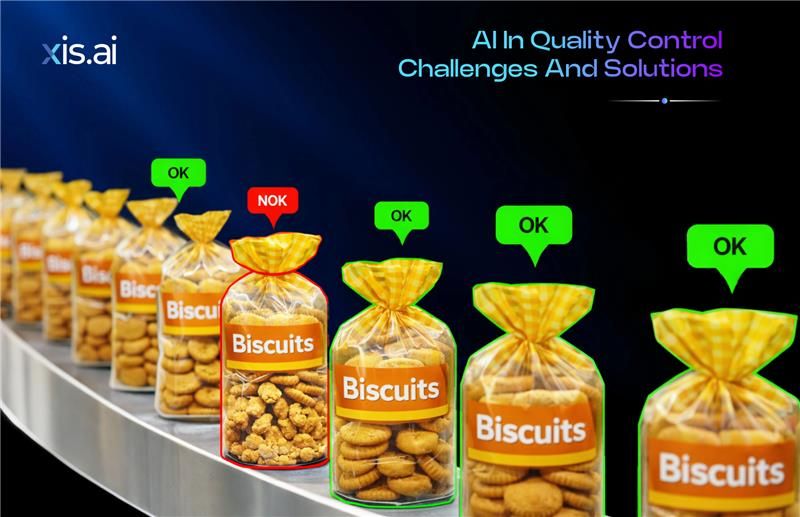
AI in quality control is rapidly transforming how manufacturers detect defects, monitor production, and maintain product consistency. Traditional inspection methods often rely on manual checks or rule-based systems, which can be slow, inconsistent, and prone to human error.
By integrating artificial intelligence, manufacturers can analyze large volumes of inspection data in real time, automate defect detection, and improve decision-making across the production line.
However, adopting AI in quality control is not without its challenges. Many organizations face difficulties related to data availability, integration with existing systems, and trust in AI-driven decisions.
This article explores the most common challenges of implementing AI in quality control and the practical solutions organizations can use to overcome them.
Why AI Is Becoming Essential in Quality Control?
AI in quality control enables manufacturers to move from reactive inspection to proactive defect prevention.
AI-powered systems can:
• Analyze visual inspection images
• Detect microscopic defects in components
• Identify patterns in production failures
• Predict potential quality issues before they occur
These capabilities significantly improve manufacturing performance by reducing scrap rates, minimizing downtime, and ensuring consistent product quality.
AI also helps organizations scale inspection processes without increasing labor costs, making it particularly valuable in high-volume manufacturing environments.
Key Challenges of AI in Quality Control
Despite its advantages, AI in quality control introduces several technical and operational challenges.
1. Limited or Poor-Quality Training Data
AI systems rely heavily on data. In quality inspection, this means thousands of labeled images of both defective and non-defective parts.
However, many manufacturers struggle with:
• Insufficient defect samples
• Poorly labeled inspection data
• Inconsistent imaging conditions
Without high-quality datasets, AI models cannot reliably detect defects.
2. Integration With Legacy Systems
Many factories still operate with legacy quality control systems, including older inspection hardware and traditional manufacturing software.
Integrating AI in quality control with these systems can be complex because:
• Data formats may not be compatible
• Systems may lack connectivity
• Real-time processing may not be supported
This often slows down AI adoption.
3. Model Reliability and Trust
Manufacturing decisions require high confidence. If an AI system misclassifies a defect, the consequences can include product recalls or safety risks.
Many organizations hesitate to rely fully on AI in quality control because:
• AI models may appear as “black boxes”
• Operators may not understand the decision logic
• False positives can disrupt production
Building trust in AI systems is therefore a critical challenge.
4. Changing Production Conditions
Production environments are dynamic. Lighting conditions, material variations, and machine calibration can all affect inspection results.
AI models trained on static datasets may struggle when:
• New product variants are introduced
• Materials change
• Equipment is upgraded
Without adaptation, the performance of AI in quality control systems can degrade over time.
5. Workforce Adoption and Skills Gap
Introducing AI changes how quality teams work.
Many organizations encounter resistance because:
• Operators fear automation replacing jobs
• Staff may lack AI-related skills
• Training programs are often insufficient
Successful adoption requires both technological and organizational change.
Practical Solutions for AI Implementation in Quality Control
While challenges exist, organizations can overcome them with the right strategies and technologies.
Build High-Quality Training Datasets: A robust dataset is the foundation of effective AI in quality control.
Manufacturers can improve datasets by:
• Collecting large volumes of inspection images
• Using data augmentation techniques
• Standardizing imaging conditions
• Implementing structured labeling processes
Synthetic data generation and simulation can also help when real defect samples are limited.
Use Scalable AI Inspection Platforms: Modern AI inspection platforms are designed to integrate with existing production systems.
These platforms often provide:
• Standard industrial communication protocols
• Compatibility with existing cameras and sensors
• Cloud or edge deployment options
This flexibility simplifies the integration of AI in quality control without requiring major infrastructure changes.
Improve Explainability of AI Decisions: Explainable AI techniques help operators understand how inspection decisions are made.
These tools can highlight:
• Regions of an image that triggered defect detection
• Confidence levels for predictions
• Feature patterns used by the model
By increasing transparency, explainable systems make AI in quality control easier to trust and validate.
Continuously Retrain AI Models: AI systems should evolve alongside production processes.
Continuous learning pipelines allow manufacturers to:
• Update models with new inspection data
• Adapt to product design changes
• Improve accuracy over time
Regular retraining ensures that AI in quality control remains effective even as manufacturing conditions change.
Invest in Workforce Training: AI adoption is most successful when employees understand how to use and manage the technology.
Organizations should provide:
• Training for quality engineers and operators
• AI literacy programs for production teams
• Clear communication about the role of automation
Empowered teams are more likely to support and successfully use AI in quality control systems.
The Future of AI in Quality Control
The future of AI in quality control lies in intelligent, autonomous inspection systems that continuously learn from production data.
Advancements in machine vision, deep learning, and edge computing will enable:
• Real-time inspection directly on production lines
• Predictive quality monitoring
• Self-optimizing manufacturing processes
As these technologies mature, AI will play a central role in building smarter, more resilient manufacturing ecosystems.
Conclusion
AI in quality control offers significant benefits for manufacturers seeking higher accuracy, faster inspections, and better production efficiency.
However, organizations must address challenges related to data quality, system integration, model reliability, and workforce readiness.
By implementing strong data strategies, scalable platforms, continuous learning models, and employee training programs, manufacturers can unlock the full potential of AI-driven quality inspection.
With the right approach, AI becomes not just a tool for detecting defects—but a strategic asset for achieving consistent, high-quality production.
AI in quality control offers significant benefits for manufacturers seeking higher accuracy, faster inspections, and better production efficiency.
However, organizations must address challenges related to data quality, system integration, model reliability, and workforce readiness. By implementing strong data strategies, scalable platforms, continuous learning models, and employee training programs, manufacturers can unlock the full potential of AI-driven quality inspection.
Platforms like xis.ai further simplify this transition by enabling manufacturers to build, train, and deploy AI-powered visual inspection models without complex development, helping quality teams automate defect detection, integrate AI into existing production environments, and scale intelligent inspection across modern manufacturing operations.
Frequently Asked Questions
What Is AI in Quality Control?
AI in quality control refers to the use of artificial intelligence technologies, such as machine learning and computer vision, to automatically detect defects and monitor manufacturing quality.
What Are the Main Challenges of AI in Quality Control?
The main challenges include limited training data, integration with legacy systems, lack of trust in AI decisions, changing production conditions, and workforce skill gaps.
How Can Manufacturers Improve AI Inspection Accuracy?
Manufacturers can improve accuracy by collecting high-quality datasets, continuously retraining AI models, and standardizing imaging conditions during inspections.
Is AI Replacing Human Inspectors in Quality Control?
AI is not replacing inspectors but augmenting them. AI handles repetitive inspection tasks, while human experts focus on analysis, decision-making, and process improvement.
Which Industries Use AI in Quality Control?
Industries such as automotive, electronics, aerospace, pharmaceuticals, and battery manufacturing widely use AI in quality control to ensure consistent product quality.
Comment
0Comments
No comments yet.