AI Blister Pack Inspection for Pharma Packaging

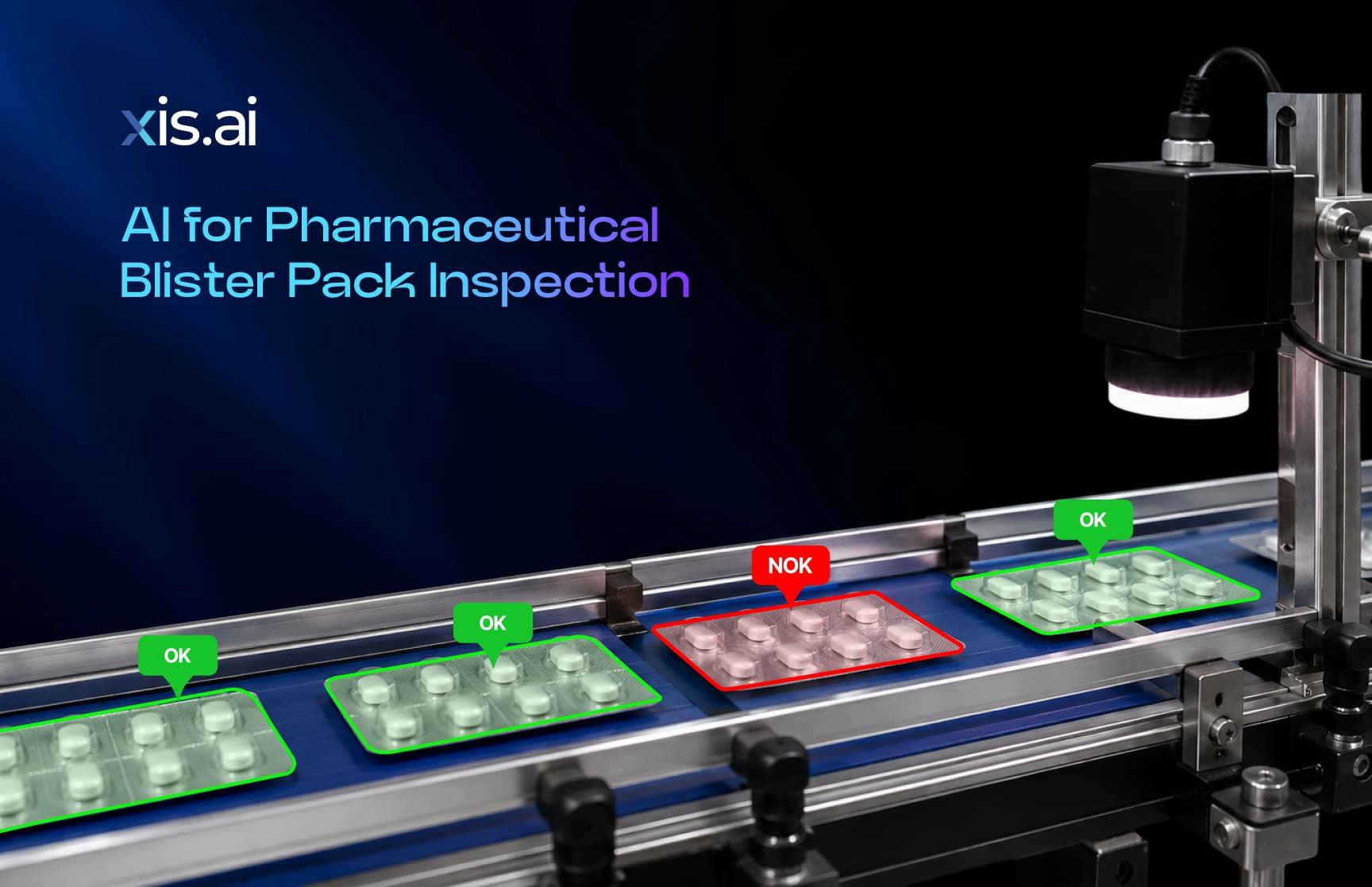
A blister pack plays an essential role in ensuring high-quality standards in the pharmaceutical industry. Everything is important when it comes to blisters – from having the right product in each cavity to maintaining its integrity thanks to the seal and adhering to print regulations.
There is always a cost to pay for errors in pharmaceutical packaging. For example, in 2017, the company Lupin Pharmaceuticals issued a recall for some batches of Mibelas 24 Fe birth control tablets because an error in their packaging could increase the chances of contraception failure and unintended pregnancies due to the presence of incorrectly placed placebo tablets inside the packages. Although the medicine met all required criteria for quality and safety, a problem with packaging still resulted in a recall of the drug across the country.
Today there is much more at stake when talking about pharmaceutical packaging inspection than just conducting a regular quality assurance process. The ever-increasing speed of production lines and the diversity of products made by pharmaceutical companies require advanced solutions for inspection of all packages coming off the line.
This is what makes AI-based blister pack inspection such an important tool for pharmaceutical businesses. With the use of AI technology, manufacturers can inspect each blister package automatically and with high accuracy.
Why Blister Pack Inspection Is More Challenging Than It Appears
The main purpose of blister packaging is to keep the tablets and capsules protected from moisture and contaminants. But, to make sure that each unit produced conforms to the required standards, it is necessary to monitor several processes during the manufacturing process.
Defects can occur at any point in this process. Common issues include:
- Missing tablets
- Cracked or chipped tablets
- Incorrect tablet placement
- Damaged blister cavities
- Weak or incomplete seals
- Printing and coding errors
- Foreign particle contamination
Defects in the pharmaceutical industry, no matter how small, can lead to product batches being rejected, possible legal problems, or recalls that can be quite expensive. The problem becomes harder when dealing with high-speed packaging processes that process thousands of units per hour.
Although traditional forms of inspection and sampling continue to be used widely, there is no way they can ensure the accuracy that would be needed to inspect each component during pharmaceutical production processes today. The need to inspect packages for defects efficiently and in a timely manner will see more producers adopt AI-powered visual inspection systems. For manufacturers wanting to automate inspection and sampling techniques, this article may prove helpful.
Why Traditional Inspection Methods Have Limitations
The pharmaceutical industry has traditionally used manual inspection techniques and rule-based machine vision systems for detecting packaging defects.
Rule-based machine vision systems operate based on pre-defined rules, like checking cavity sizes, counting tablets, or comparing contrast levels using a fixed threshold level. While these systems may work effectively in a constant environment, they can be inadequate if there is any variation in packaging materials, lighting conditions, or product formats.
Pharmaceutical manufacturers have been making many types of SKU (Stock keeping unit) products with different tablet sizes, shapes, and packaging. It can become difficult to adhere to pre-defined inspection rules for such varied products.
Manufacturers require machine vision systems that allow adaptation even when production environments change.
How AI Changes Blister Pack Inspection
AI-based inspection is different from the traditional vision systems since it does not rely only on pre-defined rules.
The AI model is taught about visual patterns from the production data and makes use of this knowledge to detect any defects, inconsistencies, or other deviations.
Using high-resolution industrial cameras, AI can analyze:
- Tablet presence and count
- Tablet integrity and shape
- Product orientation
- Blister cavity condition
- Seal quality
- Foil defects and wrinkles
- Printing and labeling accuracy
- Foreign object contamination
Since inspection takes place in real time, any faulty products are automatically identified or sorted out before moving on to other stages of packaging.
This leads to the development of a scalable quality control system that will cater for current pharmaceutical production demands.
Identifying missing pills is not the only aspect of pharmaceutical quality assurance. The pharmaceutical industry needs systems that can detect defects like scratches, contamination, packaging damage, foil problems, and other minor visual discrepancies that might have an impact on product quality. These needs are highly compatible with defect detection applications in general manufacturing industries.
Beyond Defect Detection: Creating a Smarter Quality Process
One of the best things about using AI inspection is that it provides actionable intelligence on production.
AI does not just detect bad packs; it gathers continuous inspection data that can help identify persistent process problems.
For example:
- Repeated seal defects may indicate temperature-control inconsistencies.
- Tablet-placement errors may point to feeder alignment issues.
- Recurring print-quality defects may highlight coding equipment problems.
With such an understanding, manufacturers are able to shift from reactive to proactive quality management and work on improving their processes.
While the former involves only getting rid of faulty products, the latter allows identifying and addressing the factors that cause the faults prior to affecting entire production batches.
It should be noted that a similar approach to utilizing computer vision technology is becoming more popular among manufacturers not only in the field of pharmaceutical packaging.
Supporting Compliance in a Highly Regulated Industry
Pharmaceutical manufacturing operates under strict quality and regulatory requirements, making traceability and documentation essential.
AI-powered inspection systems contribute to compliance efforts by creating digital inspection records that support:
- Batch quality verification
- Audit readiness
- Process validation activities
- Quality trend analysis
- Root-cause investigations
As regulatory requirements keep changing, digital inspection systems give manufacturers better insight into the efficiency of their packaging process.
This is consistent with the move towards smart manufacturing within the industry.
How xis.ai Supports Pharmaceutical Packaging Inspection
xis.ai provides AI-powered visual inspection solutions designed to help manufacturers automate defect detection across complex production environments.
For pharmaceutical packaging operations, the platform can support:
- Tablet presence verification
- Blister cavity inspection
- Seal integrity analysis
- Print and label verification
- Packaging quality monitoring
- Real-time production-line inspection
As opposed to conventional machine vision solutions that might necessitate much rule setting, xis.ai allows producers to implement adaptive intelligent quality control processes in line with the needs of their production line.
With the incorporation of an AI solution within their packaging process, pharmaceutical firms will be able to increase quality assurance, enhance operational efficiency, and minimize incidences where defective packaging is delivered. This is all inclusive in the bigger initiative of intelligent quality control whereby computer vision systems continuously supervise the production process.
Manufacturers exploring AI-based inspection can learn more about industrial quality control solutions or evaluate how visual inspection technology can be deployed within their own packaging environments.
The Future of Pharmaceutical Packaging Inspection
Pharmaceutical packaging has evolved from being just the last phase in manufacturing into something that ensures product quality and patient safety as well.
In view of increased production volume and quality control requirements, manufacturers have realized the need to shift from sampling inspections to continuous package monitoring.
The use of AI for blister pack inspection facilitates this through real-time computer vision and automatic defect detection systems. Be it detecting the absence of pills or seal defects or revealing ongoing process flaws – AI is assisting pharmaceutical companies in creating better packaging solutions that are compliant and efficient.
With rising quality standards and demands for increased production transparency on the horizon, the use of AI-enabled inspection systems will soon become imperative for many pharmaceutical companies.
AI-powered inspection has long ceased being merely a future development for pharmaceutical companies that wish to improve their manufacturing processes in terms of increased quality standards and efficiency. Those interested in evaluating the possibility of integrating such inspection technologies into their manufacturing processes should ask for a free demo of a computer vision solution.
Frequently Asked Questions
What is a blister pack inspection system?
A blister pack inspection system uses industrial cameras and AI-powered software to inspect pharmaceutical packaging for defects such as missing tablets, damaged cavities, seal failures, and printing errors.
How does AI improve tablet inspection?
AI analyzes tablet appearance, shape, position, and packaging integrity in real time, allowing manufacturers to identify subtle defects that may be difficult to detect consistently through manual inspection.
What defects can AI detect in blister packaging?
AI can identify missing tablets, broken tablets, double fills, contamination, damaged cavities, seal defects, foil imperfections, and print-quality issues.
Why is pharmaceutical packaging inspection important?
Packaging inspection helps ensure patient safety, regulatory compliance, product quality, and manufacturing consistency while reducing the risk of recalls and rejected batches.
Can AI inspection systems be integrated into existing pharmaceutical packaging lines?
Yes. Modern AI vision platforms can be integrated into existing packaging processes and inspection workflows with minimal disruption to production operations.
Comment
0Comments
No comments yet.