AI Injection Molding Quality Inspection for Plants

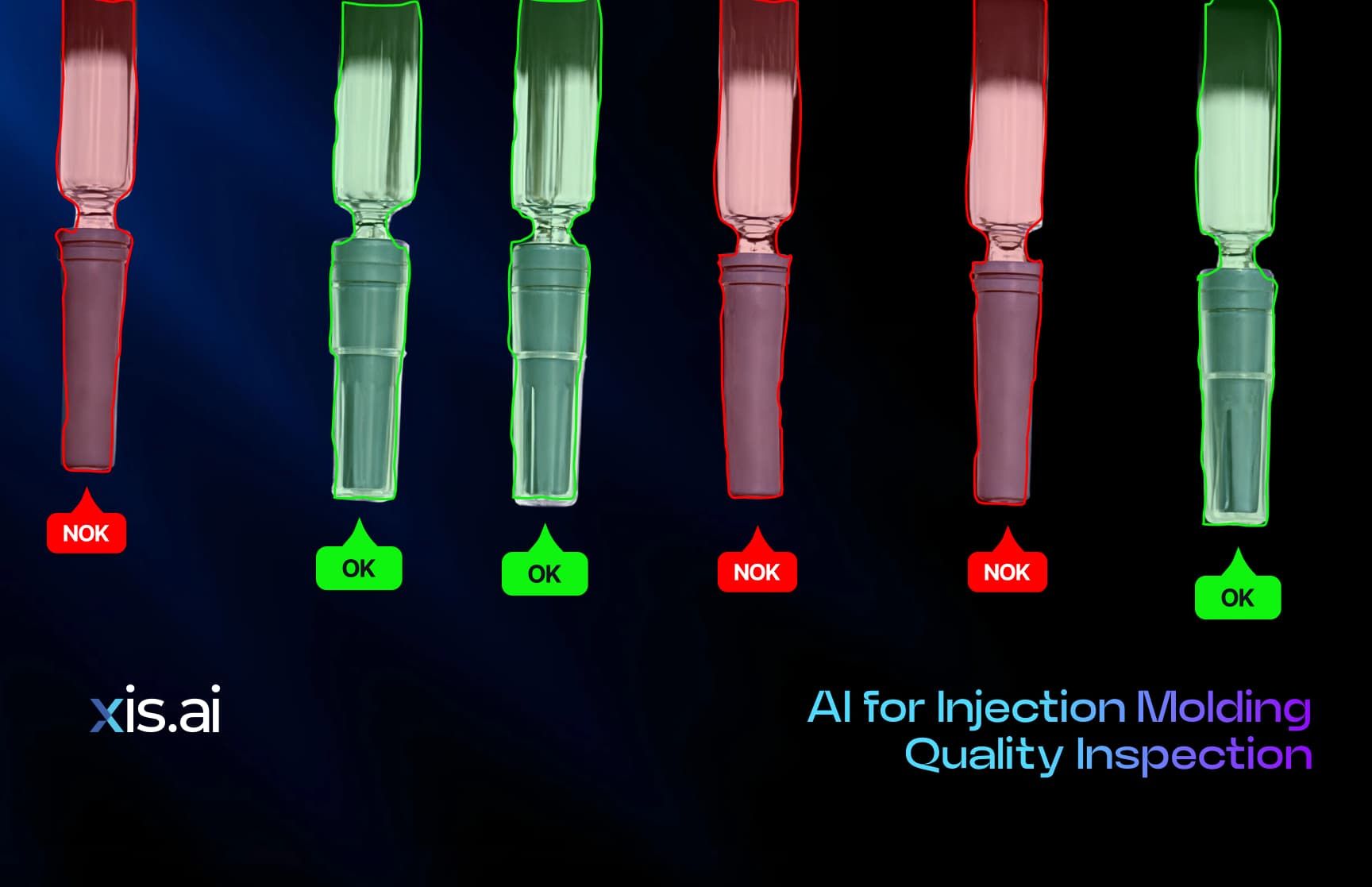
Injection molding defect detection is now a critical part of modern manufacturing as companies shift toward faster, more automated production environments. Traditional manual inspection methods struggle to maintain consistency at high volumes, especially when parts need to meet strict visual and dimensional standards. AI-based systems are changing this by enabling real-time inspection directly on the production line, reducing human error and improving overall efficiency.
In injection molding, defects can occur due to small variations in process parameters such as temperature, pressure, cooling time, or material quality. Even minor instability in the machine setup can result in recurring issues across thousands of parts. Common defects include:
- Warping or deformation
- Sink marks on surfaces
- Flash along edges
- Short shots (incomplete filling)
- Surface scratches or discoloration
Injection molding defect detection powered by AI helps identify these issues instantly, allowing manufacturers to react before defective batches continue further in production.
How AI Improves Injection Molding Quality Control
Modern plastic defect detection AI systems use computer vision and deep learning models to inspect each molded part in real time. High-resolution industrial cameras capture images immediately after ejection, and AI algorithms compare them against trained datasets of acceptable and defective samples. Unlike traditional rule-based inspection systems, AI does not rely on fixed thresholds; instead, it learns patterns and continuously improves accuracy over time as it processes more production data.
This makes injection molding defect detection highly effective in environments where product variations, materials, or designs frequently change. It adapts without requiring constant reprogramming, which is a major advantage in flexible manufacturing setups.
In most factories, injection molding defect detection is part of a broader molding quality inspection system, which typically includes:
- Industrial cameras with controlled lighting setups
- Edge computing units for real-time processing
- AI software for defect classification
- Cloud or dashboard systems for quality monitoring and analytics
A similar approach is used in xis.ai’s AI for assembly line inspection, where real-time computer vision systems detect defects instantly and remove faulty products without interrupting production flow.
Platforms like xis.ai enhance this ecosystem by providing scalable AI infrastructure for visual inspection. xis.ai focuses on industrial computer vision solutions that enable manufacturers to deploy real-time defect detection models, integrate them into production lines, and continuously improve accuracy through data-driven learning.
This integration enables real-time decision-making. Defective parts can be automatically rejected, while operators receive instant alerts if defect rates exceed acceptable limits. Over time, this also strengthens injection molding quality control, as manufacturers can use xis.ai analytics tools to identify root causes behind recurring defects and optimize machine settings accordingly.
Benefits and Future of Injection Molding Defect Detection
One of the major advantages of AI-driven injection molding defect detection is improved consistency. Human inspectors may experience fatigue or variation in judgment, especially during long shifts. AI systems, on the other hand, maintain stable performance 24/7, ensuring uniform quality across all production cycles.
With platforms like xis.ai, manufacturers also gain centralized visibility into production quality across multiple lines or factories. This helps in benchmarking performance, tracking defect trends, and scaling inspection systems without redesigning infrastructure.
Additional benefits include:
- Reduced scrap and rework costs
- Faster inspection cycles with real-time feedback
- Improved traceability through stored inspection data
- Better process optimization using AI-generated insights
Looking ahead, injection molding defect detection is evolving toward predictive and autonomous systems. Instead of only detecting defects after they occur, AI models—especially those deployed through xis.ai—are moving toward predicting defects based on live process data, enabling proactive adjustments before failures happen.
Conclusion
Injection molding defect detection is becoming a core pillar of smart manufacturing. It enables faster inspection, higher accuracy, and scalable quality control across production environments. With AI platforms like xis.ai, manufacturers can transform traditional inspection systems into intelligent, data-driven ecosystems that continuously improve performance and reduce waste.
Frequently Asked Questions
What is injection molding defect detection?
It is an AI-based inspection process that identifies defects in molded plastic parts using computer vision and machine learning.
What defects can be detected using AI systems?
AI systems can detect warping, sink marks, flash, short shots, surface scratches, and color inconsistencies in plastic parts.
How does xis.ai help in injection molding quality control?
xis.ai provides AI-powered computer vision infrastructure that enables real-time defect detection, analytics, and integration with manufacturing systems for improved quality control.
Can AI inspection systems integrate with existing production lines?
Yes, injection molding defect detection systems from platforms like xis.ai can be integrated using cameras and edge devices without major changes to existing equipment.
Is AI better than manual inspection?
Yes, AI provides higher consistency, speed, and accuracy, especially in high-volume manufacturing environments.
Comment
0Comments
No comments yet.