AI for Glass and Reflective Surface Inspection

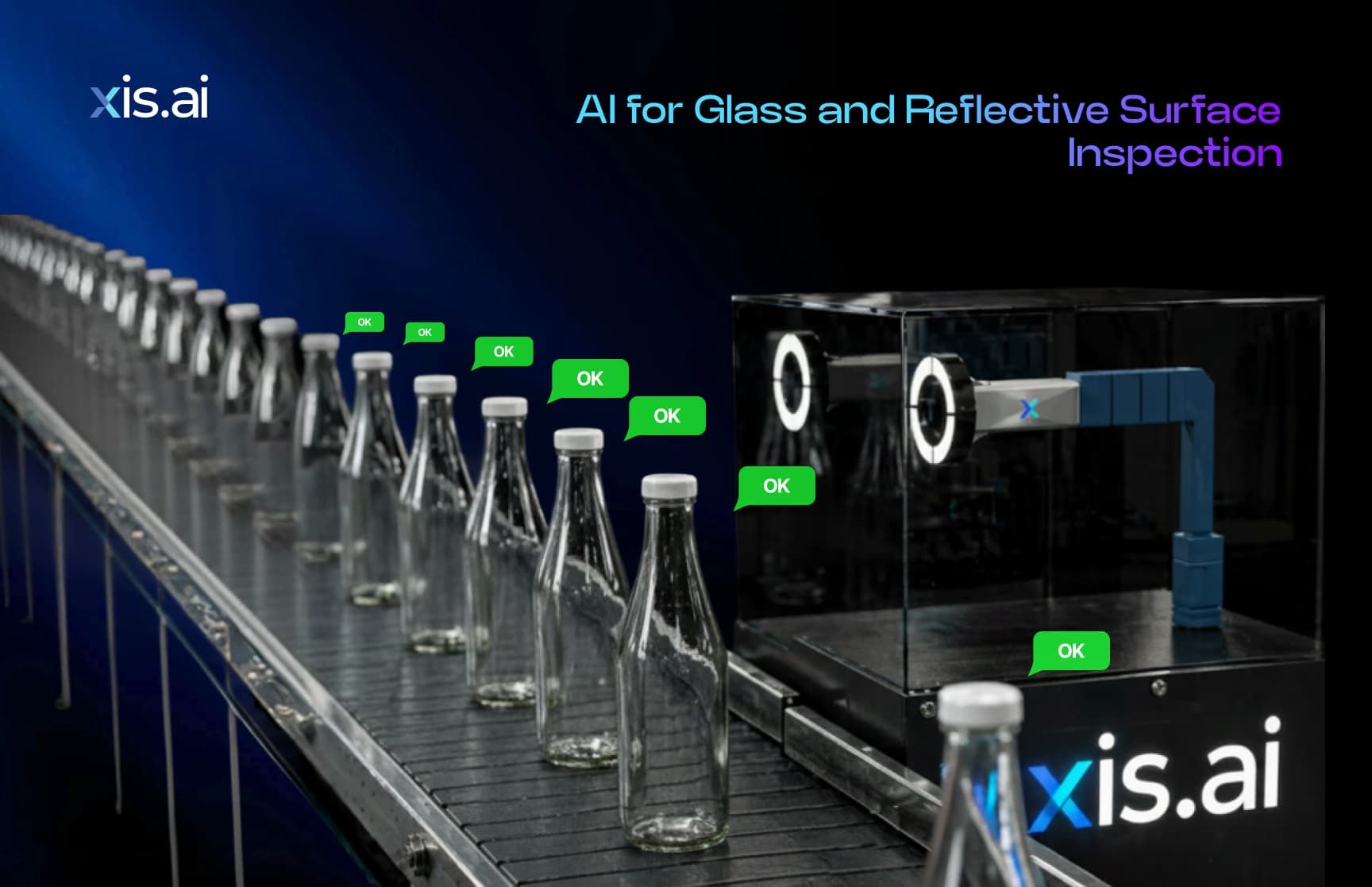
Glass and reflective materials are critical across industries, from automotive windshields to smartphone displays—but inspecting them accurately has always been a challenge. Their transparency, reflectivity, and sensitivity to lighting conditions make defect detection far more complex than with opaque materials.
With the rise of artificial intelligence, inspection systems are becoming significantly more capable. Modern solutions combine advanced imaging with machine learning to deliver faster, more reliable results, even in environments where traditional systems struggle.
Why Is Inspection of Glass and Reflective Surfaces Challenging?
Unlike solid materials, glass interacts with light in multiple ways. It can transmit, refract, and reflect light simultaneously, which creates visual noise and inconsistencies during inspection.
Common Challenges
- Subtle defects that are difficult to distinguish from the background
- Glare and reflections masking imperfections
- Variations in thickness, coatings, and curvature
- High precision requirements for micro-level defects
These factors often lead to missed defects or false positives when using conventional inspection methods.
How AI Is Changing the Game
Artificial intelligence introduces a more flexible and intelligent approach to inspection. Instead of relying on fixed rules, AI models learn from real production data and continuously improve their ability to detect defects.
By analyzing complex visual patterns, AI can identify irregularities that would otherwise go unnoticed. It also adapts to changes in lighting, material type, and surface conditions—making it far more reliable in dynamic manufacturing environments.
Key Advantages
- Ability to detect low-contrast and micro-level defects
- Reduced false alarms by distinguishing defects from reflections
- Real-time analysis for high-speed production lines
- Continuous improvement through machine learning
xis.ai’s Approach to AI-Driven Inspection
xis.ai focuses on building inspection systems that are tailored to real manufacturing challenges rather than relying on one-size-fits-all solutions. By combining AI with precision imaging, their systems are designed to handle the unique complexities of transparent and reflective materials.
A key strength lies in developing custom-trained models using actual production data. This ensures that the system understands specific defect types relevant to each application, resulting in more accurate and consistent performance.
Their solutions are also designed for easy integration into existing production lines, allowing manufacturers to upgrade inspection capabilities without major disruptions.
How Modern Vision Inspection Systems Work
Today’s inspection systems combine hardware and software into a seamless workflow:
Step-by-Step Process
- Image Capture: High-resolution cameras capture detailed images under controlled lighting
- Pre-Processing: Image enhancement techniques improve clarity and reduce noise
- AI Analysis: Machine learning models detect anomalies and irregular patterns
- Defect Classification: Identified issues are categorized based on type and severity
- Automated Decision-Making: The system generates instant pass/fail results
This process enables consistent quality control without slowing down production.
Improved Inspection for Reflective Surfaces
Reflective materials such as coated glass, mirrors, and polished surfaces often create misleading visual signals. AI helps overcome this by learning to separate actual defects from optical distortions.
As a result, manufacturers benefit from:
- More accurate detection of scratches and surface inconsistencies
- Stable performance under varying lighting conditions
- Fewer false rejections and reduced rework
Advancements in Transparent Object Inspection
Inspecting transparent materials has traditionally been one of the most difficult tasks in quality control. AI-driven systems now make it possible to identify both surface and internal defects with high precision.
Benefits Include
- Non-contact inspection for delicate materials
- Detection of internal flaws such as bubbles or inclusions
- Consistent results across different product types
- Reduced reliance on manual inspection
Industry Applications
AI-powered inspection systems are widely used across multiple sectors:
Automotive: Ensuring the quality of windshields, mirrors, and other glass components
Electronics: Inspecting display panels, touchscreens, and protective glass
Construction: Maintaining quality standards for structural and architectural glass
Packaging: Checking bottles and containers for defects and deformities
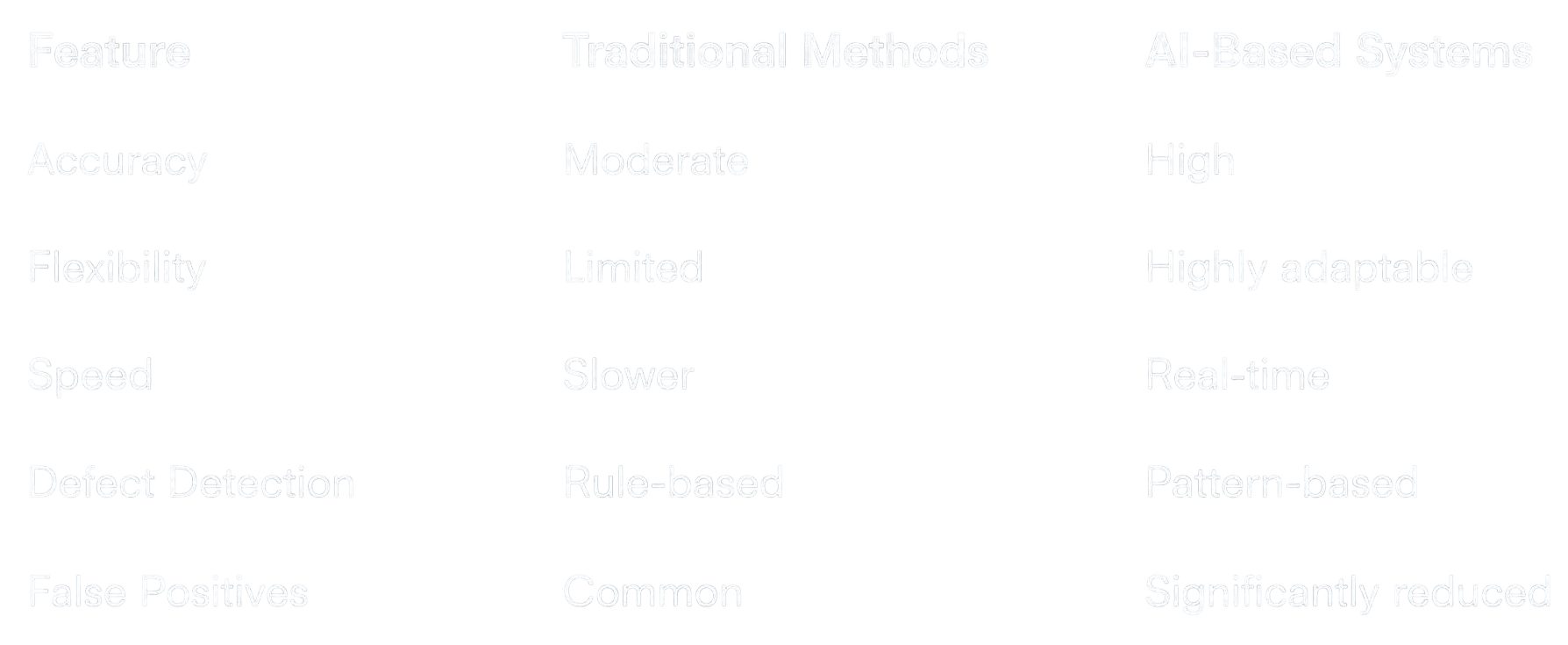
Traditional vs AI-Based Inspection
Conclusion
AI is reshaping how manufacturers approach the inspection of glass and reflective materials. With improved accuracy, adaptability, and efficiency, modern systems are helping industries achieve higher quality standards while reducing waste and operational costs.
Looking ahead, inspection technologies will continue to evolve with smarter, self-learning models, deeper integration into Industry 4.0 environments, and advanced 3D analysis capabilities. These innovations will not only improve defect detection but also enable predictive quality control—allowing manufacturers to prevent issues before they occur.
Platforms like xis.ai by Xray Lab are at the forefront of this transformation. By combining AI-driven analytics with advanced imaging, xis.ai enables manufacturers to handle complex inspection challenges with greater precision and scalability. Its ability to adapt to different materials, production conditions, and defect types makes it a powerful solution for industries working with transparent and reflective surfaces.
As expectations for quality and efficiency continue to rise, adopting intelligent inspection platforms such as xis.ai is becoming essential for manufacturers aiming to stay competitive in a rapidly advancing industrial landscape.
Frequently Asked Questions
1. What makes glass inspection difficult?
Its transparency and reflective properties create visual challenges that can hide defects or produce misleading signals.
2. How does AI improve inspection accuracy?
AI learns from real data, allowing it to detect subtle defects and adapt to changing conditions more effectively than rule-based systems.
3. Can these systems work in real-time production?
Yes, modern AI-powered systems are designed to operate at high speeds without interrupting production lines.
4. Are internal defects detectable?
Advanced systems can identify both surface and internal flaws, depending on the imaging technology used.
5. Which industries benefit the most?
Automotive, electronics, construction, and packaging industries all rely heavily on accurate inspection of glass and reflective materials.
Comment
0Comments
No comments yet.