AI as a Competitive Advantage in Manufacturing
Recent Post:

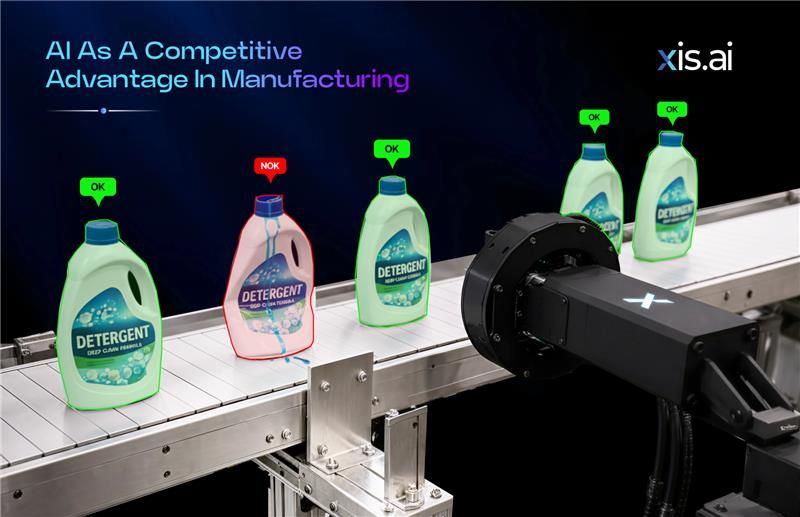
In today’s fast-paced industrial landsape, manufacturers face increasing pressure to improve efficiency, reduce waste, and maintain product quality. Artificial intelligence (AI) is no longer just a futuristic tool—it has become a critical competitive advantage. By leveraging AI, companies can optimize production, enhance quality control, and make smarter, data-driven decisions.
1. Optimizing Production Processes
AI-powered systems analyze production line data in real time to identify bottlenecks, predict machine downtime, and optimize workflow. This level of automation and predictive insight enables manufacturers to increase throughput while minimizing operational costs.
2. Predictive Maintenance
Unexpected machine failures can disrupt production and inflate costs. AI algorithms process sensor data from equipment to predict when maintenance is required, reducing unplanned downtime and extending machinery lifespan. Platforms like xis.ai integrate these predictive maintenance capabilities seamlessly into industrial operations.
3. Enhanced Quality Control
AI inspection systems detect defects faster and more accurately than traditional methods. From visual inspections using computer vision to X-ray and CT-based internal analysis, AI ensures that products meet strict quality standards, reducing recalls and enhancing brand reputation.
4. Data-Driven Decision Making
AI enables manufacturers to harness the massive amounts of data generated by modern production lines. By converting data into actionable insights, companies can make better decisions around inventory management, supply chain optimization, and production scheduling, giving them a strategic edge over competitors.
5. Cost Reduction and Efficiency Gains
By automating repetitive tasks, optimizing machine usage, and improving quality control, AI significantly reduces operational costs. Manufacturers can reallocate resources to innovation and strategic growth, creating long-term value and a sustainable competitive advantage.
Conclusion
Incorporating AI into manufacturing is no longer optional—it’s a necessity for companies looking to stay ahead. From predictive maintenance and quality inspection to data-driven decision-making, AI empowers manufacturers to reduce costs, improve efficiency, and deliver superior products. By adopting AI-powered solutions and complementing technologies from xis.ai, businesses can gain a measurable competitive advantage in today’s industrial landscape.
Frequently Asked Questions
How does AI provide a competitive advantage in manufacturing?
AI optimizes production, improves quality control, reduces downtime, and enables data-driven decisions, giving manufacturers higher efficiency and cost savings.
What are the key AI technologies used in manufacturing?
Computer vision, predictive maintenance algorithms, robotics, machine learning analytics, and AI-powered inspection systems are the main technologies.
Can AI reduce production costs?
Yes. AI minimizes errors, predicts equipment failures, and streamlines workflows, all of which reduce waste and operational costs.
How does AI improve quality control in manufacturing?
AI can detect defects in real time using visual, X-ray, or sensor data, ensuring consistent product quality and reducing recalls.
Is AI suitable for small and medium manufacturers?
Absolutely. AI solutions are scalable, and platforms like xis.ai provide tailored tools that can fit both large and small-scale manufacturing operations.
Comment
0Comments
No comments yet.